


 Current
location:
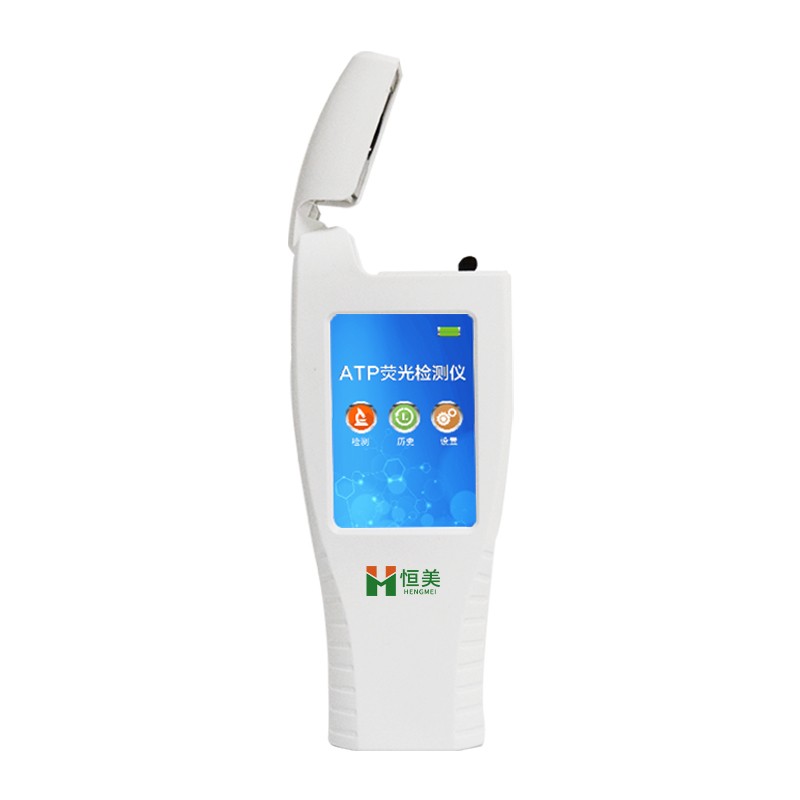
Use ATP readings as part of a consistent cleaning verification procedure. With HM-ATP, the compatible sampling reagent releases ATP and produces a light signal. Compare the RLU result with site- and method-specific action limits while retaining the sampling location and cleaning context.
HM-ATP is part of the HENG MEI Intelligent Manufacturing range supplied by Shandong Hengmei Electronic Technology Co., Ltd.
How the measurement works
HM-ATP measures light generated when ATP reacts with luciferase-luciferin reagents. Compatible swabs collect the material and release ATP for the reaction. Results are expressed in relative light units and interpreted within a defined hygiene verification procedure.
Set up the analytical workflow
- Identify the sampling location and its cleaning stage.
- Collect the sample using the compatible swab and specified sampling procedure.
- Activate the reagent and read within the swab instructions.
- Record the RLU result, compare it with the established limit and document any cleaning follow-up.
Technical configuration
| Parameter | Specification |
|---|---|
| Reading time | 15 seconds |
| Result range | 0–999,999 RLU |
| Display | 3.5-inch touchscreen |
Make the sampling area consistent
A 10 cm by 10 cm surface area equals 100 cm². Sampling a 5 cm by 5 cm area covers 25 cm², one quarter of that area. Those two swabs represent different collection opportunities even when read on the same instrument. Use the area and technique specified by the hygiene procedure when comparing locations or cleaning cycles.
Use RLU within the hygiene decision process
The ATP signal can reflect microbial and other biological residues. Keep the reading connected to the sampled surface, cleaning stage and swab system. Follow the defined recleaning and investigation process for an excursion. Where the quality question concerns a particular organism or viable count, use the corresponding microbiological method.
Use ATP checks in a cleaning response
Choose sampling locations that relate to the cleaning objective and assign the timing after the defined cleaning stage. Train operators to use the same area, contact technique and reagent sequence. If a reading exceeds the established action limit, follow the documented cleaning and follow-up process and preserve the first result. Review repeated excursions by location, cleaning method and operational conditions. Keep the swab identity and lot with the record so reagent handling can be investigated as well. A consistent response process turns a rapid RLU reading into information that helps manage the hygiene program.
Define sampling locations and action limits
Choose the surfaces or liquids and establish the timing relative to cleaning. Standardize the sampled area, technique and reagent handling. Build action limits around the actual reader, swabs and hygiene objectives, then define what happens after an excursion. Review consumable storage and control checks alongside the reader’s 15-second measurement time.
Investigate unexpected results
| Observed issue | Checks and follow-up |
|---|---|
| Readings vary between operators | Compare sampled area, swabbing technique, activation and reading time. |
| A cleaned surface gives a high result | Review residual material, cleaning sequence and reagent compatibility with the application. |
| Control performance changes | Check reagent storage, lot condition and the instrument check procedure. |
Keep a usable analytical record
Retain these details with the result so the preparation, measurement and subsequent review can be reconstructed.
- Surface and sampling area
- Time relative to cleaning
- Swab lot and handling
- RLU limit, result and follow-up
Technical questions from operators
Can every site use the same RLU limit?
Establish limits for the actual instrument, reagent, sampling procedure and application.
Does a low RLU value establish sterility?
The result supports the defined ATP hygiene check. Sterility assessment uses its own methods and acceptance process.
Use the required controls and the method settings for each sample group, and preserve the original observations alongside the accepted result and review action.
Article address:https://www.molecularbio.cn/news/using-atp-readings-in-cleaning-verification.html