

 Current location: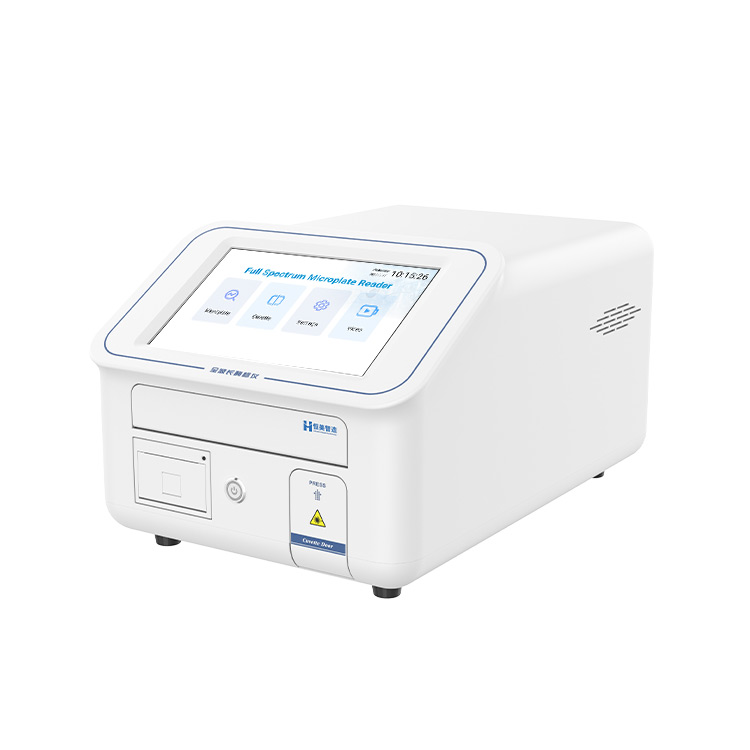
 +86
17853698681
+86
17853698681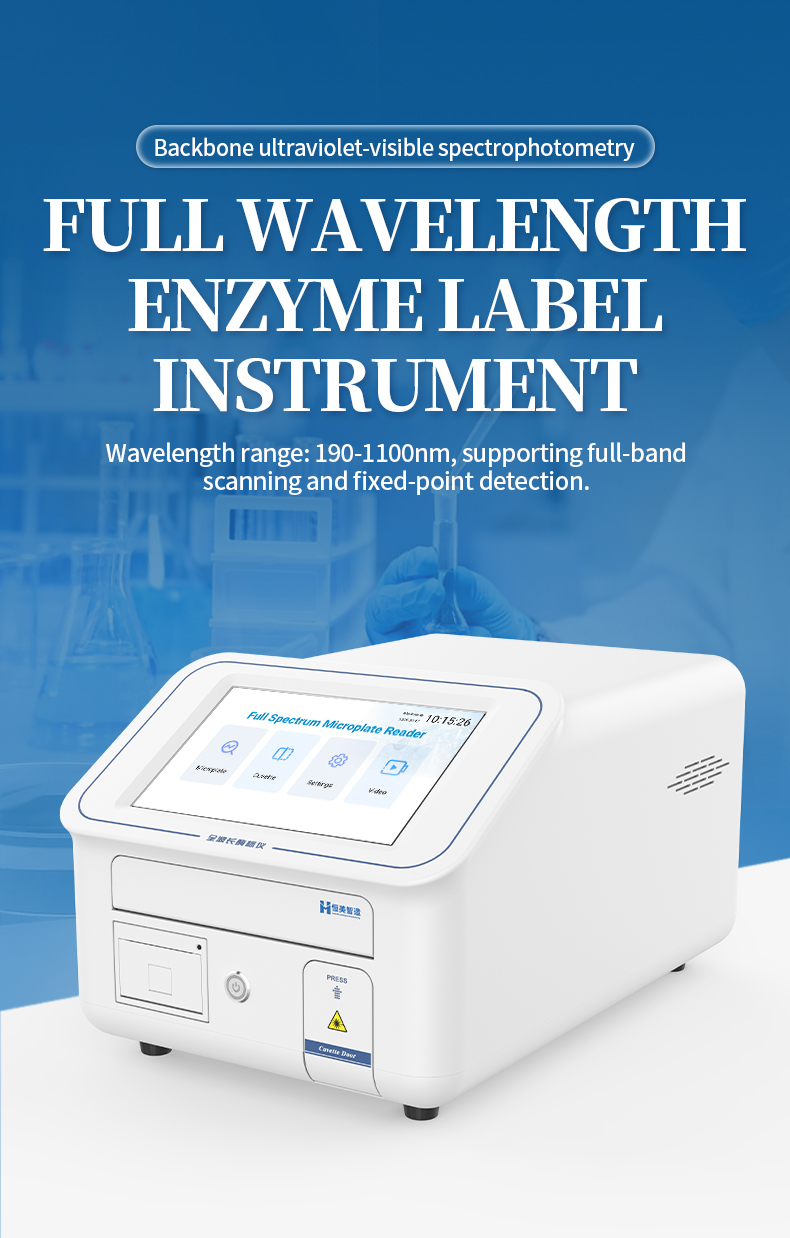


Product Introduction
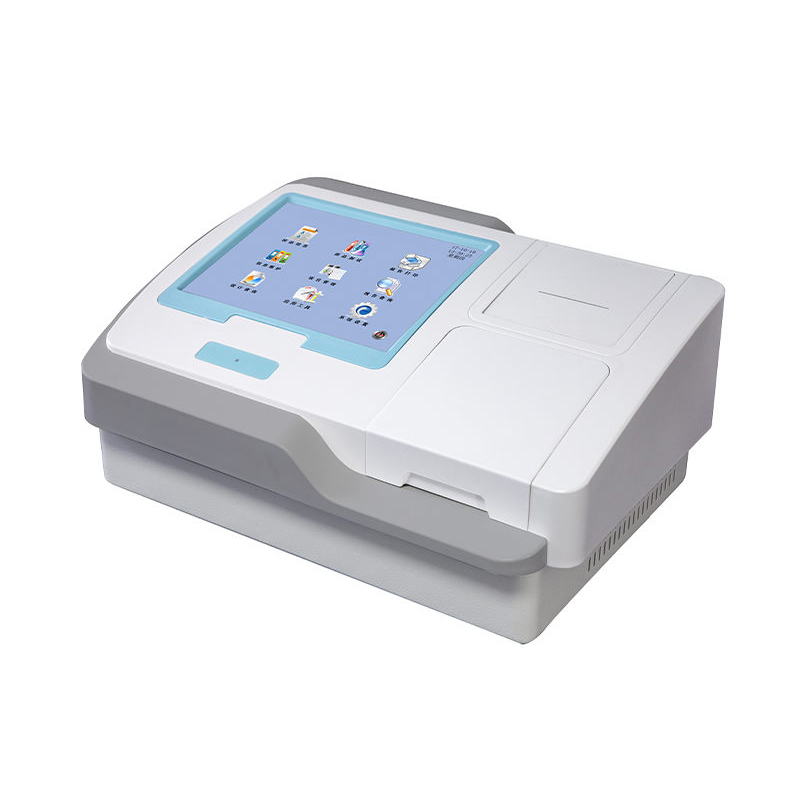
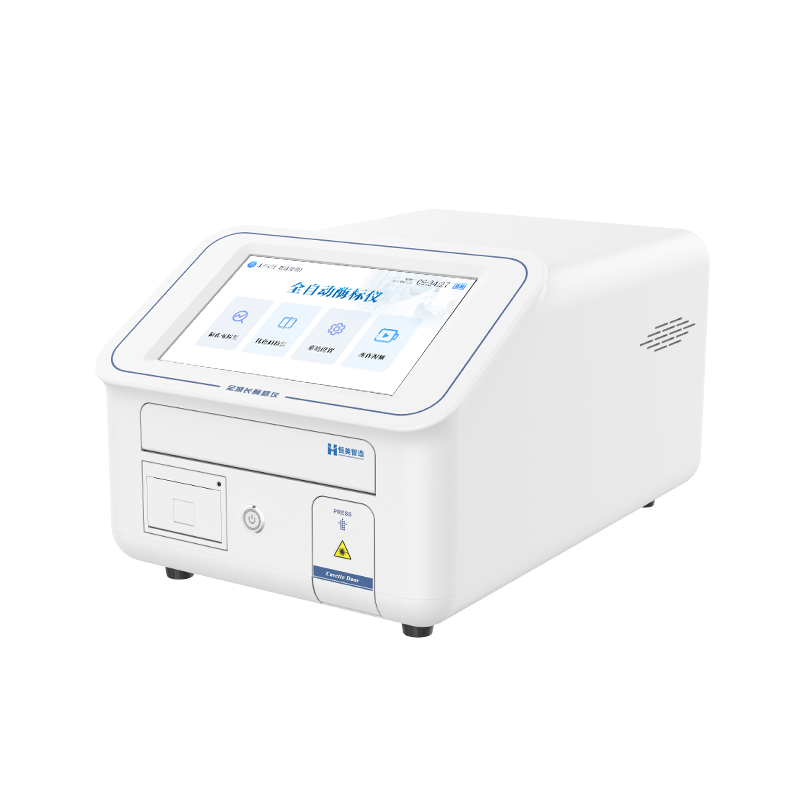
Laboratories engaged in pharmaceutical development, environmental testing, and food safety analysis face a persistent challenge: traditional microplate readers restrict researchers to predetermined wavelengths, forcing facilities to purchase multiple devices or outsource spectral analysis. The HM-96Q full spectrum microplate reader directly addresses this operational bottleneck by delivering continuous wavelength coverage from 190 nm to 1100 nm within a single compact platform.
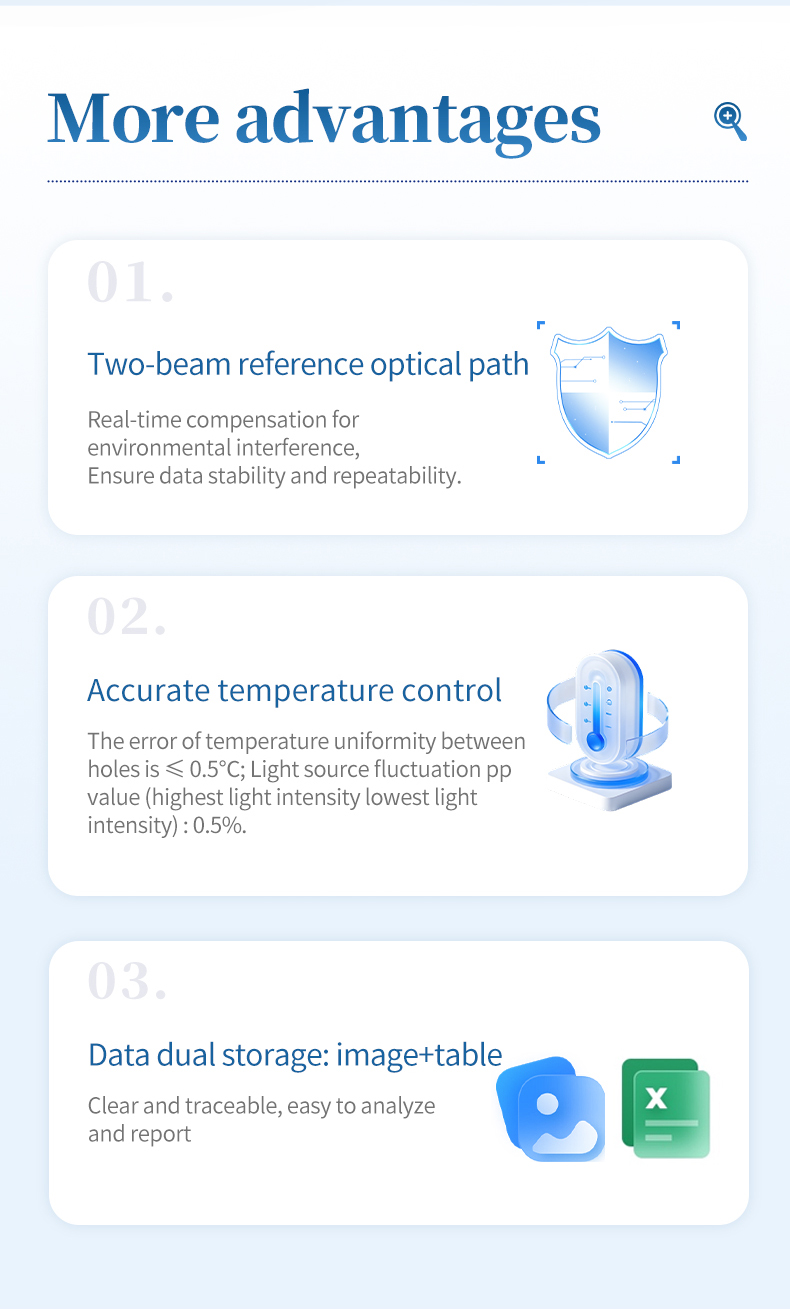
At the core of the HM-96Q is a pulsed xenon flash lamp paired with a dual-beam reference optical path. This architecture provides real-time compensation for environmental fluctuations such as temperature drift and lamp intensity variation, ensuring that absorbance readings remain stable across extended screening campaigns. For research teams running high-throughput drug discovery pipelines, this stability translates to consistent IC50 curves and reproducible pharmacokinetic profiles.
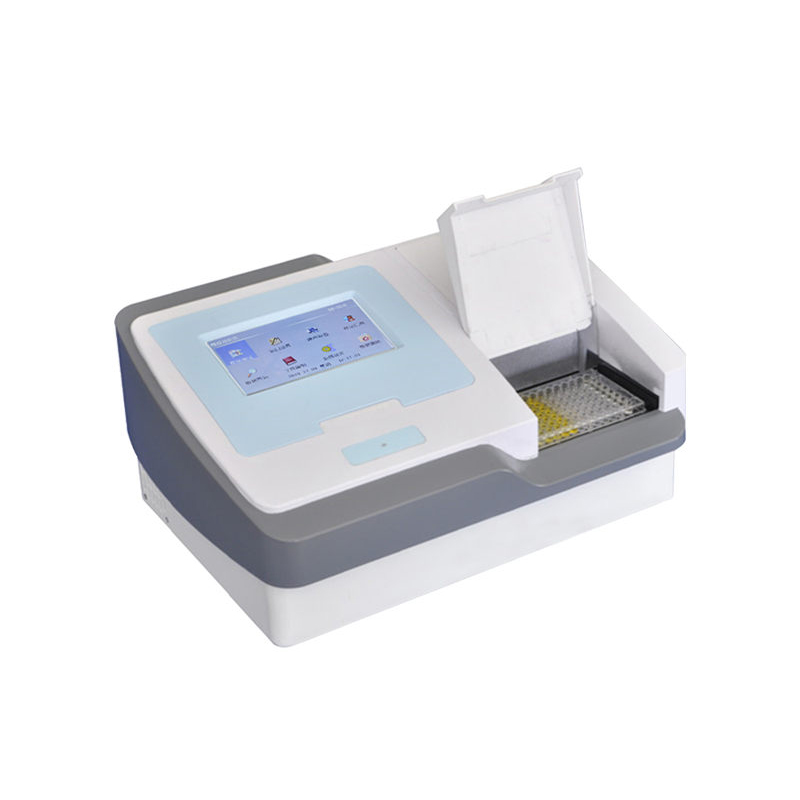
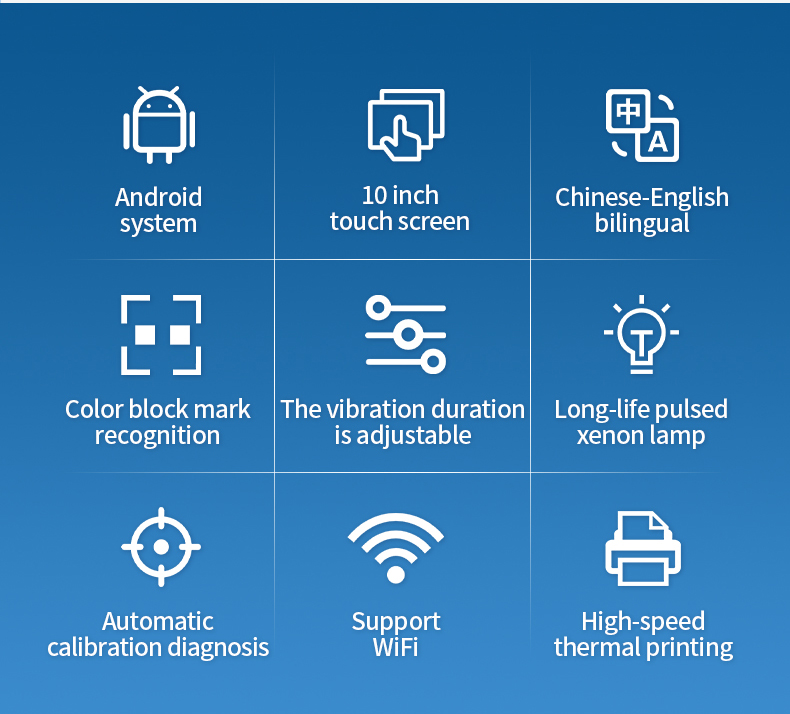
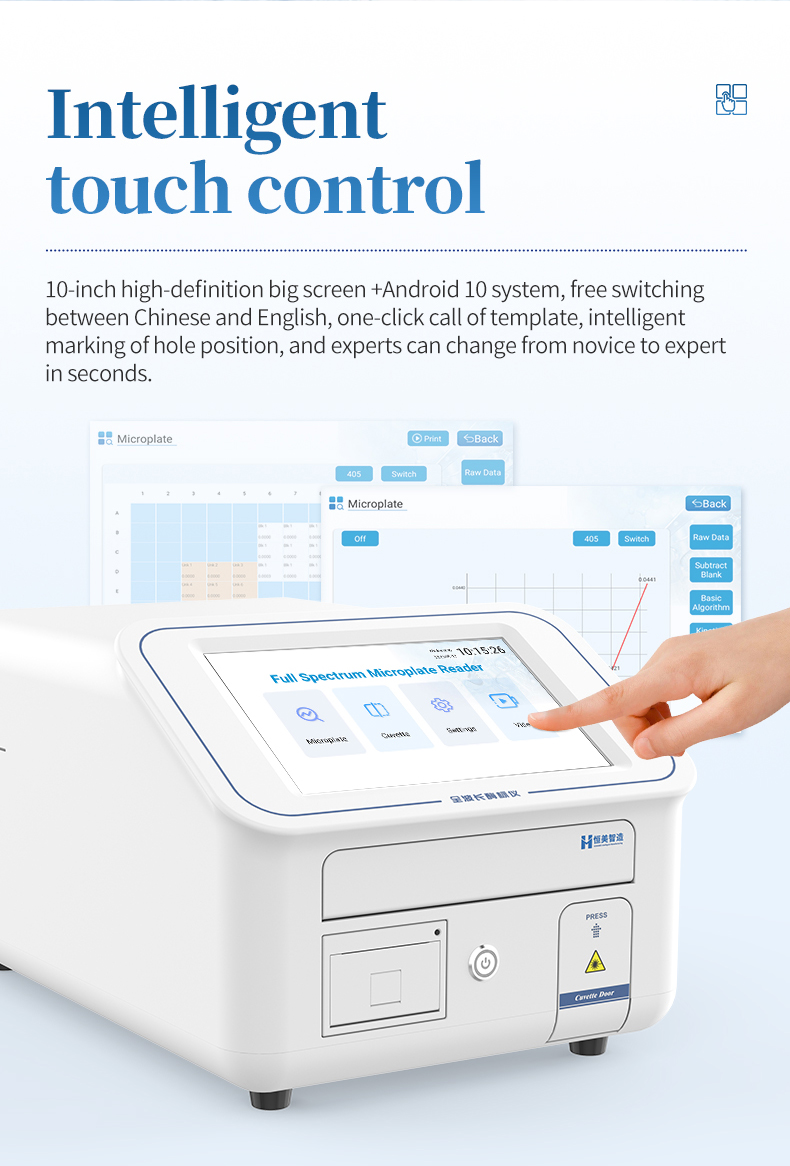
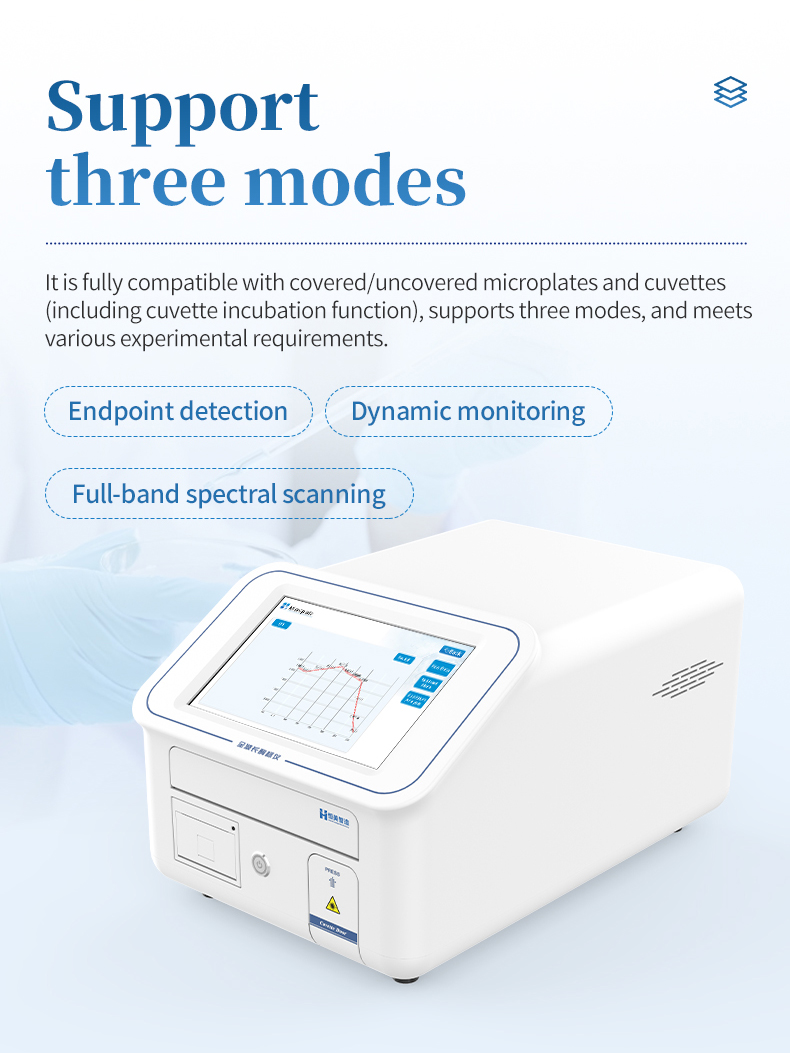
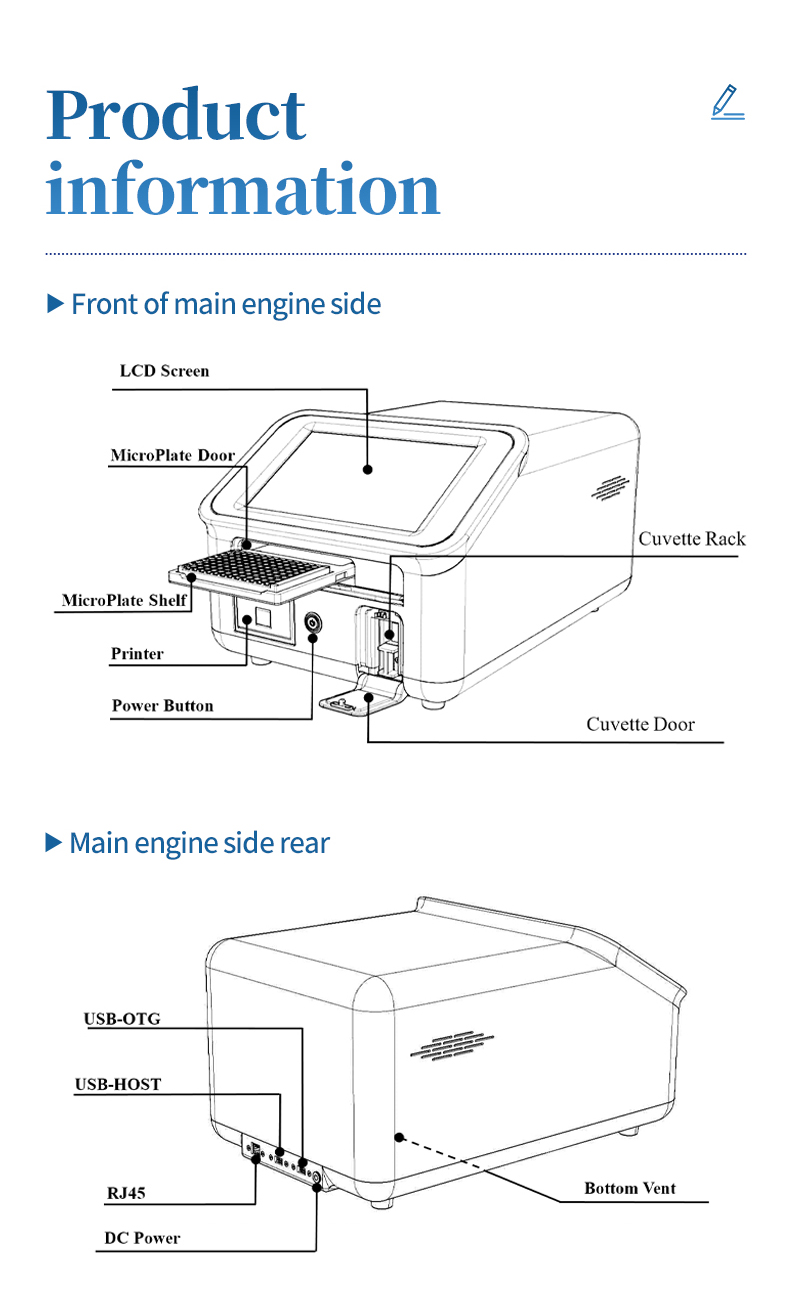
The instrument's Android 10 operating system and 10-inch color touchscreen streamline method development and routine operation. Researchers can preset experimental templates, configure concentration gradients, and execute curve fitting without external software dependencies. Three detection modes — endpoint, kinetic, and spectral scanning — accommodate everything from simple protein quantification to complex enzyme inhibition studies. Compatibility with both 96-well microplates and cuvettes further extends the analytical range, allowing seamless transition from high-throughput screens to precise single-sample verification.
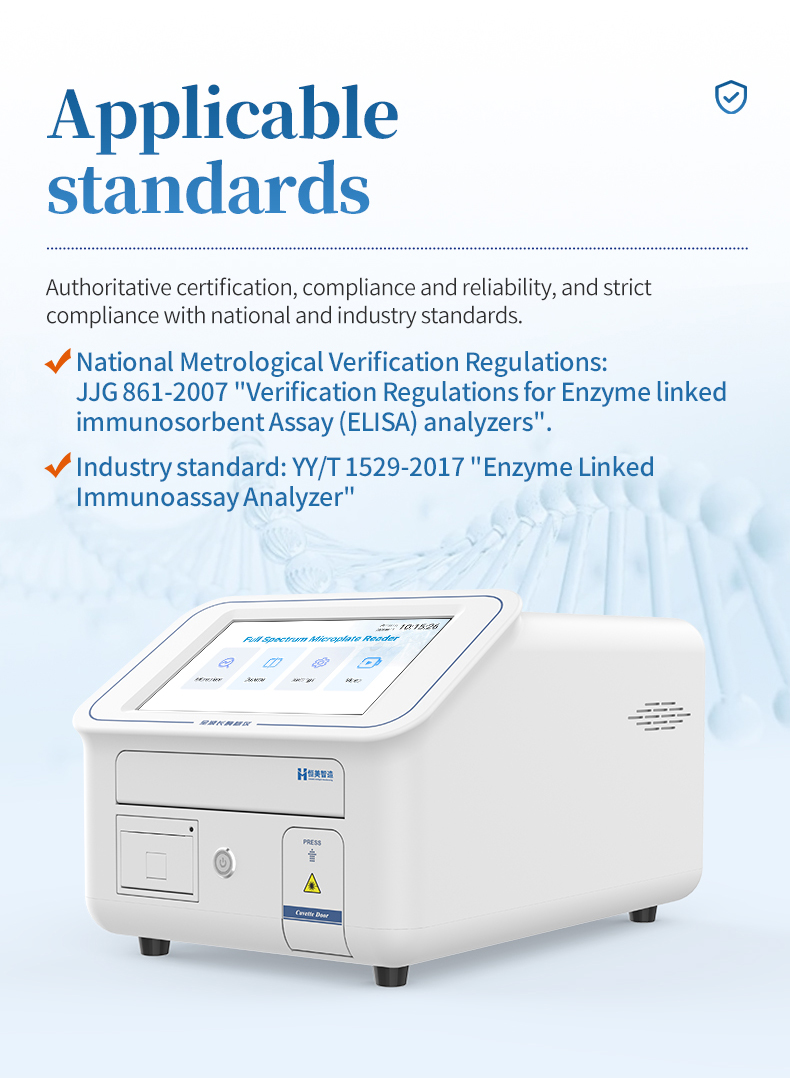
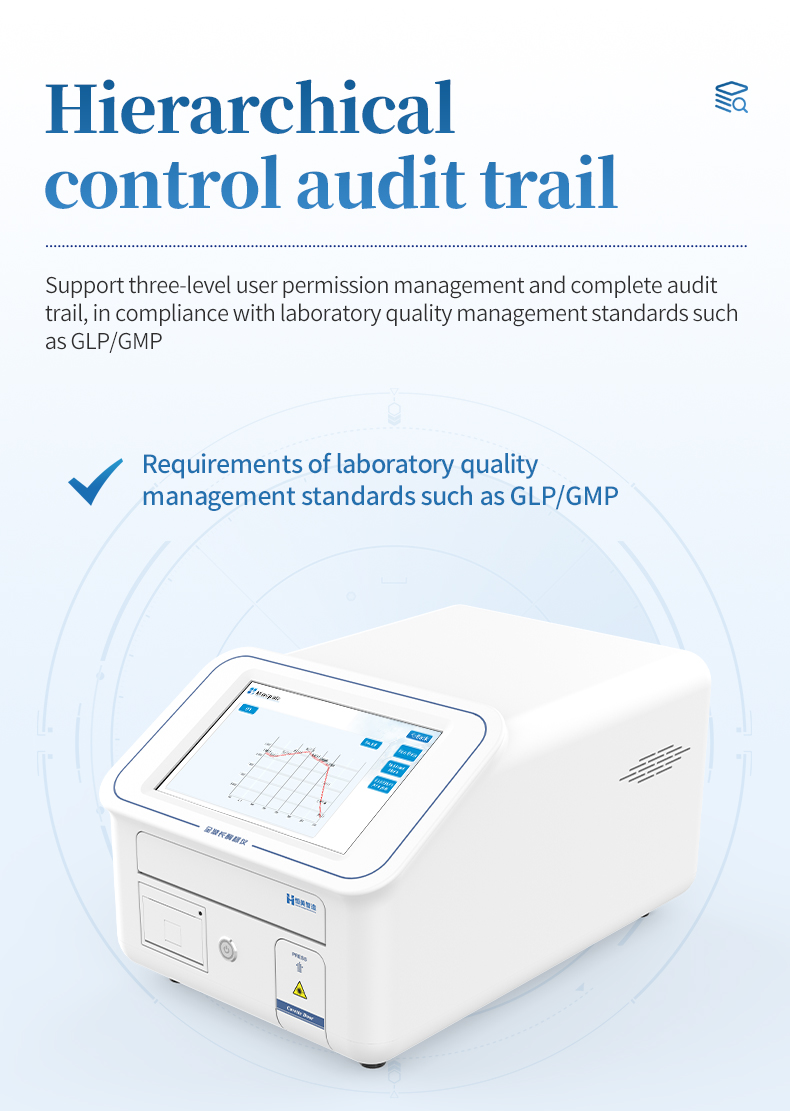
Regulatory compliance is critical in analytical laboratories. The HM-96Q integrates three-level user permission management and a comprehensive audit trail aligned with GLP/GMP standards. Built-in thermal printing and USB export support complete data documentation for regulated environments.
Applications
Pharmaceutical drug discovery: High-throughput screening, IC50 determination, and cytotoxicity profiling benefit from full spectral coverage across UV and visible regions.
Biologics quality control: Protein quantification by A280, endotoxin detection, and aggregation analysis require wavelength flexibility unavailable on fixed-filter readers.
Environmental water monitoring: Quantification of heavy metal complexes, organic pollutant indicators, and nutrient levels through colorimetric methods at diverse wavelengths.
Soil contaminant screening: Extraction-based assays for pesticide residues and petroleum hydrocarbons using wavelength-optimized detection protocols.
Food allergen and toxin detection: ELISA-based screening for gluten, mycotoxins, and bacterial toxins with customizable wavelength selection for optimal signal-to-noise ratio.
Clinical diagnostics: Biomarker quantification and serological assay development requiring kinetic readouts and spectral confirmation.
Key Features & Advantages
Full spectrum coverage eliminates instrument redundancy: The 190-1100 nm range replaces multiple dedicated analyzers, reducing capital expenditure and bench space requirements.
Dual-beam reference architecture ensures data consistency: Real-time optical compensation maintains reading stability across batch sequences and environmental changes.
Three-mode detection flexibility: Endpoint quantification, real-time kinetic monitoring, and full spectral scanning support diverse assay chemistries without hardware modification.
Dual sample format compatibility: 96-well microplate handling for high throughput plus cuvette accommodation for reference method validation and low-volume samples.
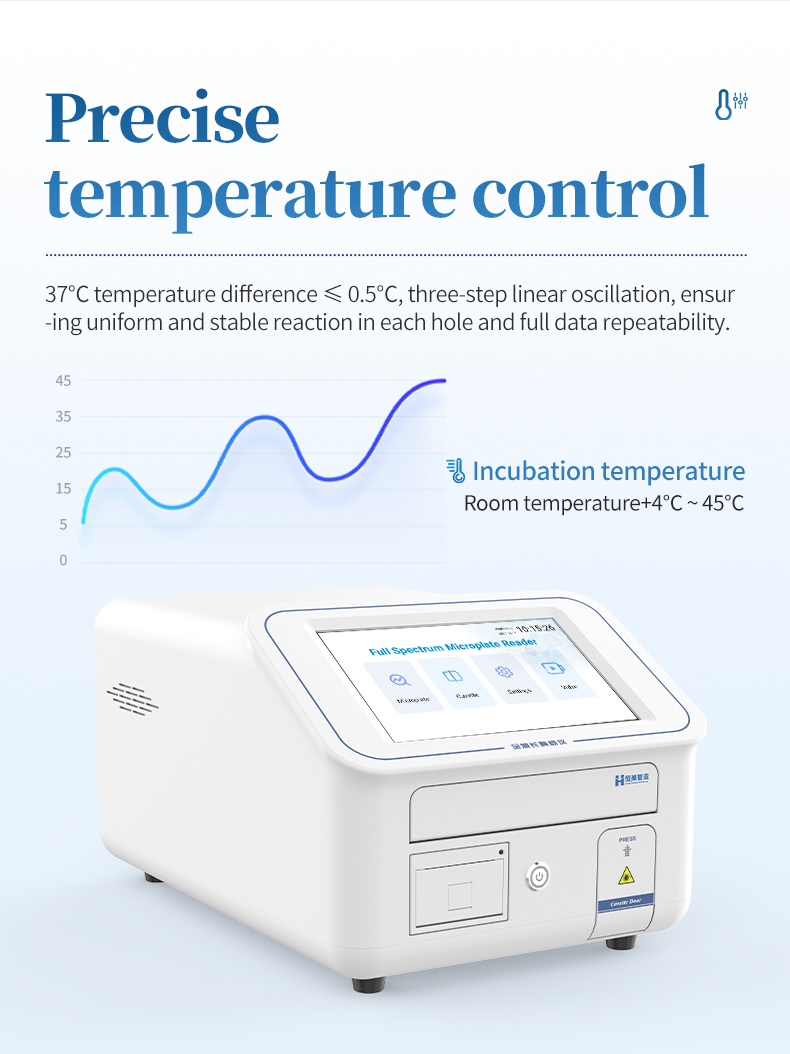
Temperature-controlled incubation with shaking: RT+4 to 45 ℃ incubation range with linear shaking at three speeds supports enzyme reactions and cell-based assays requiring thermal and agitation control.
GLP/GMP-ready compliance infrastructure: Three-level user permissions, complete audit trails, and electronic signature readiness satisfy regulatory inspection requirements.
Self-diagnostic and auto-calibration: Automated optical path verification and mechanical precision checks reduce downtime and manual calibration burden.
Template-driven workflow automation: One-click preset methods and customizable protocols accelerate method transfer between operators and projects.
Integrated data management: Onboard thermal printing plus Excel and PDF export via USB streamlines documentation for LIMS integration.
Cloud-connected software maintenance: Wi-Fi enabled remote firmware updates ensure continuous access to feature improvements without service visits.
Technical Specifications
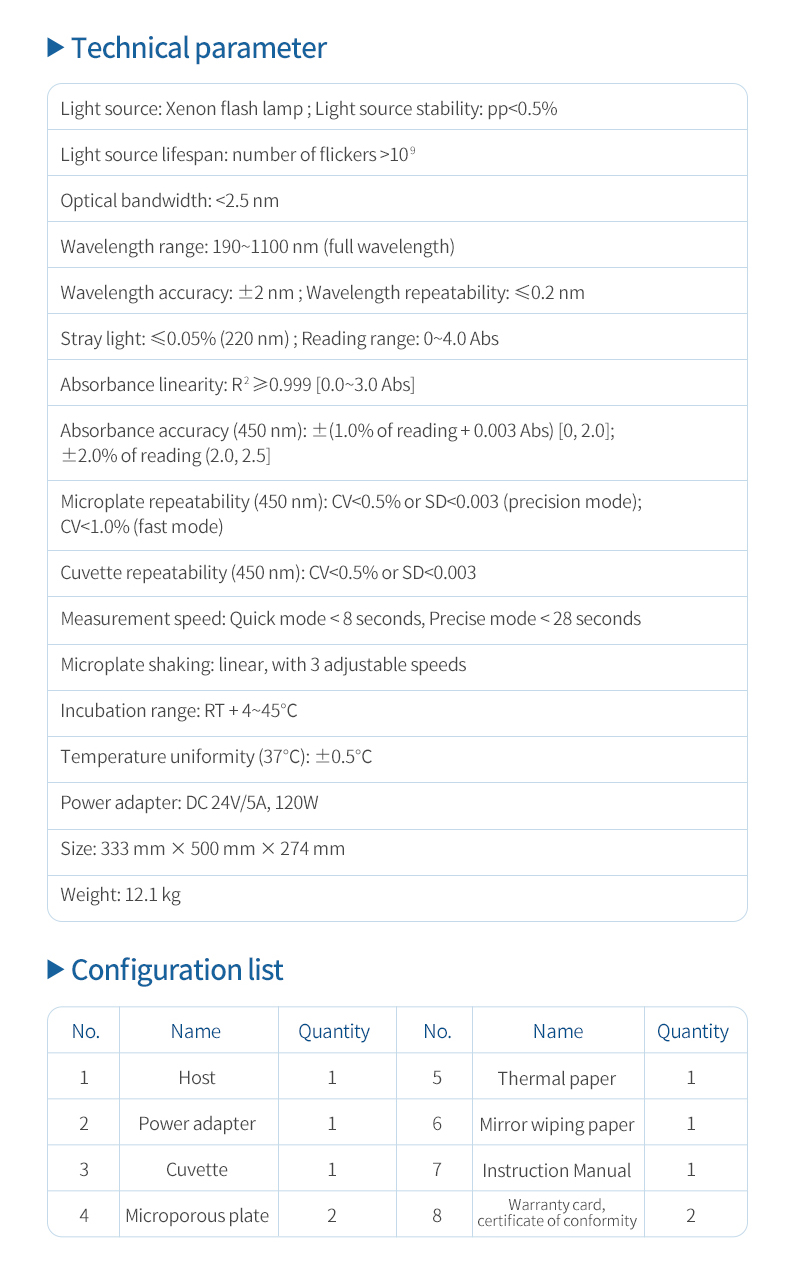
| Parameter | Specification |
|---|---|
| Light Source | Xenon flash lamp |
| Source Stability | pp < 0.5% |
| Source Lifetime | Flash count > 10⁹ |
| Spectral Bandwidth | < 2.5 nm |
| Wavelength Range | 190 ~ 1100 nm (full spectrum) |
| Wavelength Accuracy | ± 2 nm |
| Wavelength Repeatability | ≤ 0.2 nm |
| Stray Light | ≤ 0.05% (at 220 nm) |
| Reading Range | 0 ~ 4.0 Abs |
| Absorbance Linearity | R² ≥ 0.999 [0.0 ~ 3.0 Abs] |
| Absorbance Accuracy (450 nm) | ±(1.0% of reading + 0.003 Abs) [0, 2.0]; ±2.0% of reading (2.0, 2.5] |
| Microplate Repeatability (450 nm) | CV < 0.5% or SD < 0.003 (precision mode); CV < 1.0% (fast mode) |
| Cuvette Repeatability (450 nm) | CV < 0.5% or SD < 0.003 |
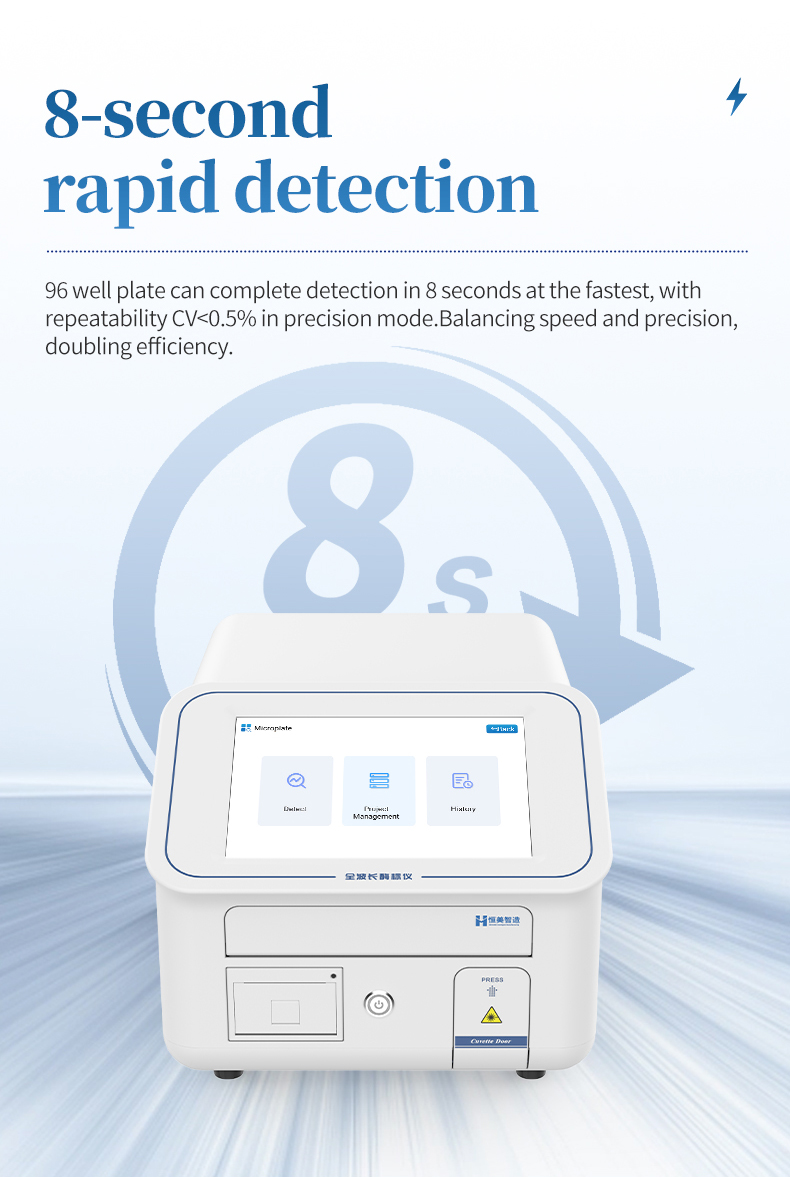
| Measurement Speed | Fast mode < 8 s; Precision mode < 28 s |
| Microplate Shaking | Linear, 3 speeds adjustable |
| Incubation Range | RT + 4 ~ 45 ℃ |
| Temperature Uniformity (37 ℃) | ± 0.5 ℃ |
| Power Adapter | DC 24V / 5A, 120W |
| Dimensions | 333 mm × 500 mm × 274 mm |
| Weight | 12.1 kg |
FAQ
What types of assays benefit most from full spectrum microplate reading compared to fixed-wavelength instruments?
Assays requiring spectral scanning — such as nucleic acid purity determination by A260/A280 ratio, protein conformation studies by second-derivative spectra, and dye-based cell viability assays with overlapping absorbance peaks — benefit significantly. Fixed-wavelength readers cannot resolve spectral features or optimize detection wavelengths for novel chromophores, whereas the HM-96Q acquires complete absorbance profiles in a single measurement cycle.
How does the dual-beam optical path improve data reliability in kinetic enzyme assays?
The dual-beam design continuously monitors a reference channel alongside the sample channel. During extended kinetic runs lasting 30 minutes or longer, lamp intensity fluctuations and thermal drift affect both channels equally. Real-time ratio calculation cancels these common-mode variations, delivering baseline stability that single-beam instruments achieve only through frequent blank corrections. This is particularly valuable for enzyme inhibition studies where small absorbance changes must be distinguished from instrumental drift.
Can the HM-96Q replace separate UV spectrophotometers and visible-light plate readers in a QC laboratory?
Yes. The 190-1100 nm range spans both the UV region required for nucleic acid and aromatic amino acid quantification and the visible region used for colorimetric ELISA and Bradford protein assays. By supporting both 96-well microplates and standard cuvettes, the HM-96Q consolidates high-throughput screening and reference-method verification onto one platform, reducing equipment footprint and cross-instrument calibration overhead.
What GLP/GMP compliance features are built into the software architecture?
The system implements three-level user permissions (administrator, operator, guest) with password protection and automatic session timeout. All method modifications, calibration events, and data export actions are timestamped and logged in an immutable audit trail. User identities accompany every data record, supporting 21 CFR Part 11 readiness for pharmaceutical laboratories subject to FDA inspection. Data export in PDF format includes embedded metadata for traceability.
How does incubation and shaking functionality expand assay capability beyond standard readers?
Temperature-controlled incubation from RT+4 to 45 ℃ with ±0.5 ℃ uniformity enables enzyme reactions, cell proliferation assays, and temperature-dependent binding studies to proceed directly on the instrument deck. Linear shaking at three speeds ensures homogeneous mixing of reagents and prevents well-edge effects in viscous samples. These features eliminate the need for separate incubators and plate shakers, reducing assay variability introduced by sample handling between devices.
Article address:https://www.molecularbio.cn/pro10/laboratory-microplate-analysis-system.html