

 Current location: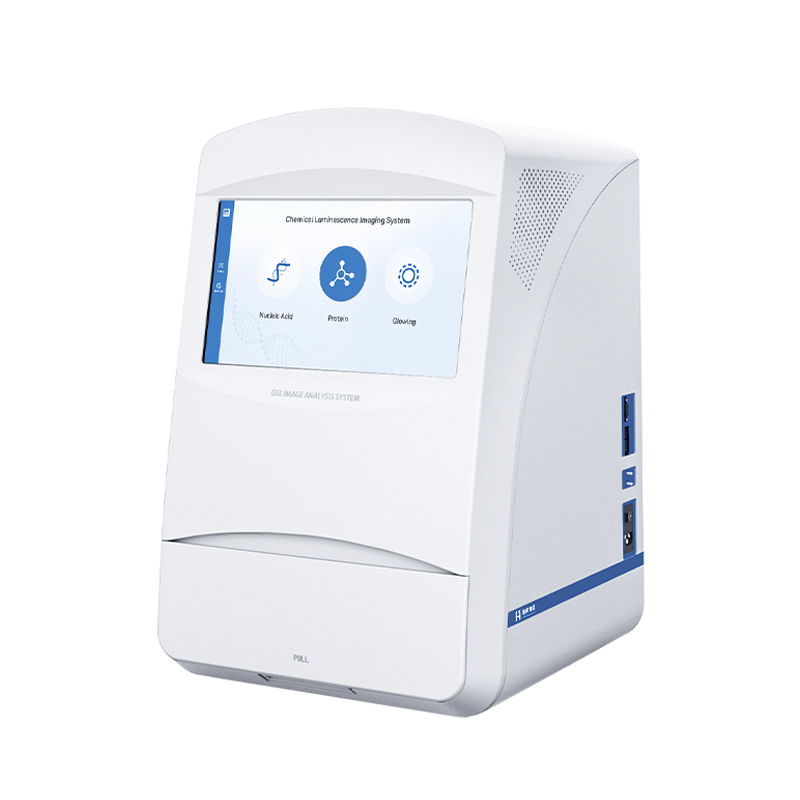
 +86
17853698681
+86
17853698681


Product Introduction
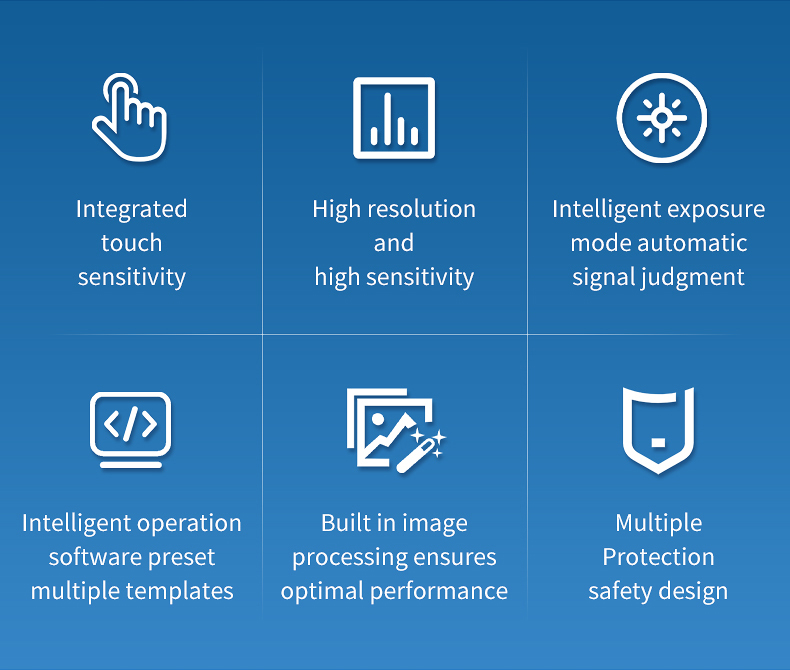
Western Blot is one of the most widely used techniques in protein research, yet it remains challenging to produce consistent, publication-ready images. Variability in exposure time, background noise, and signal saturation can undermine months of experimental work. The HM-CL-2 Integrated Chemiluminescence Imager addresses these challenges through a purpose-built hardware and software platform.
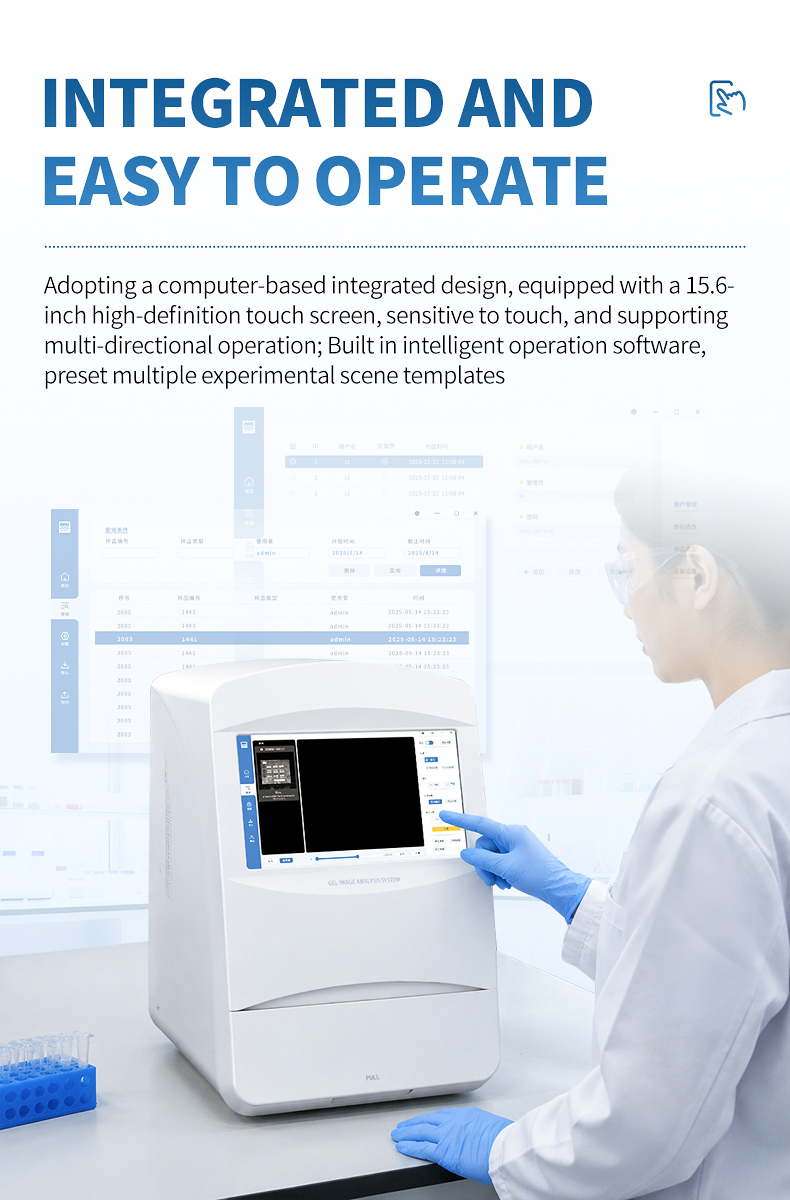
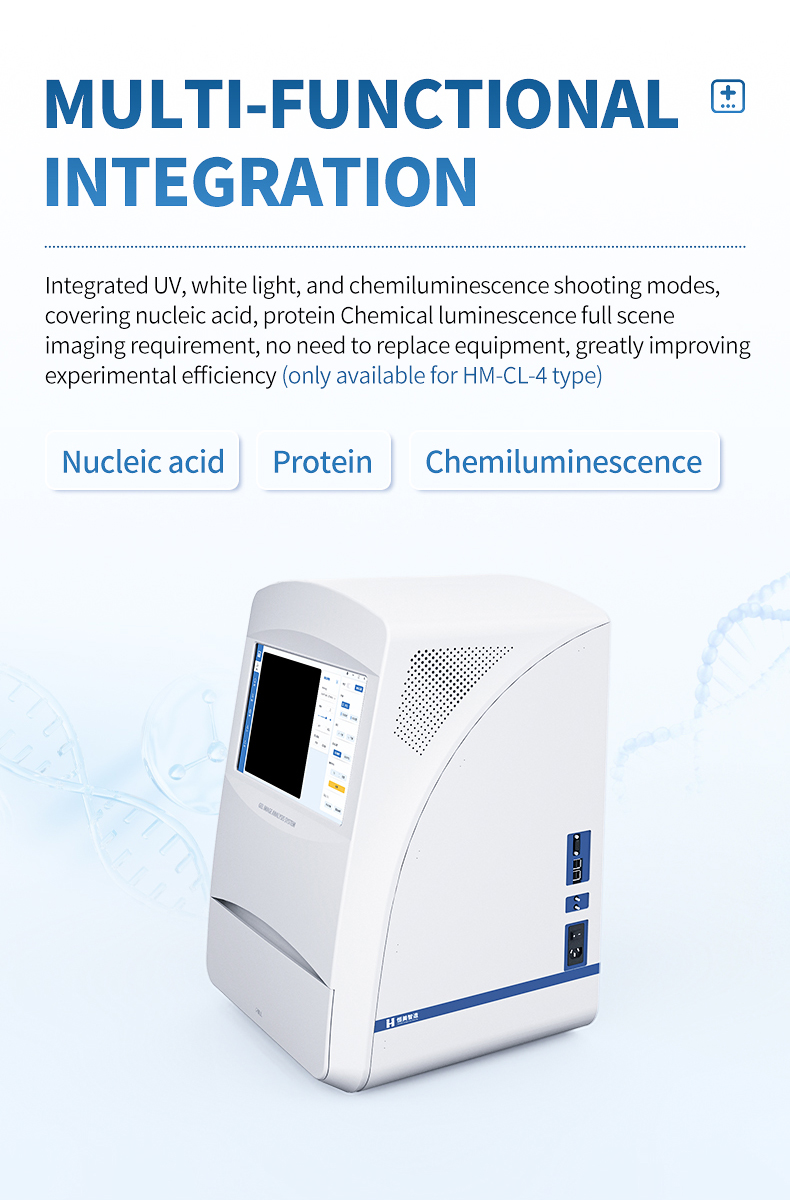
Unlike traditional imaging systems that depend on external computers and multiple cables, the HM-CL-2 integrates a 15.6-inch capacitive touchscreen, cooled CMOS camera, high-transmittance optics, and white-light source into a single enclosure. This integration reduces setup complexity and ensures that every capture occurs under stable, controlled conditions.
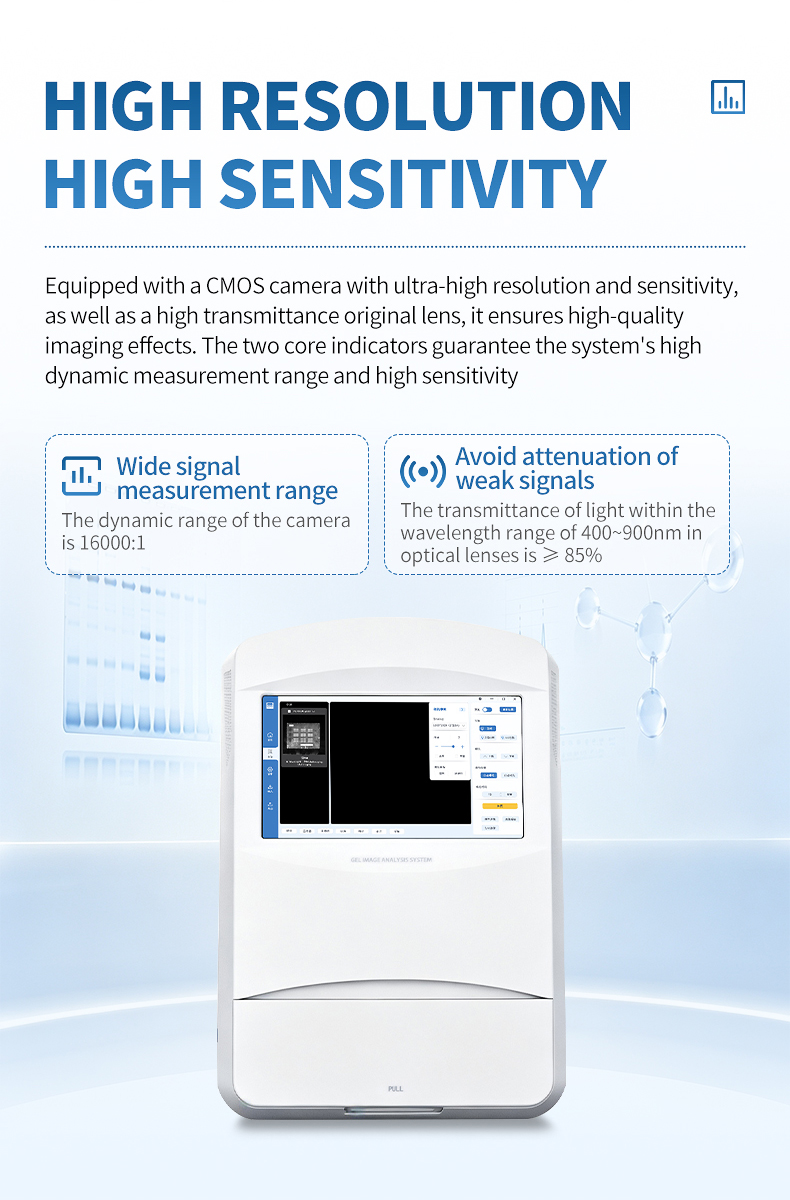
The system's 9 MP sensor operates at -25 °C, suppressing dark current to less than 0.0005 e-/pixel/second. Combined with 16-bit gray-scale resolution, the HM-CL-2 captures both faint and intense bands in a single exposure, supporting accurate densitometric quantification. The F0.95 optical lens transmits ≥ 85% of light across the 400–900 nm spectrum, preserving the weak signals typical of low-abundance proteins.
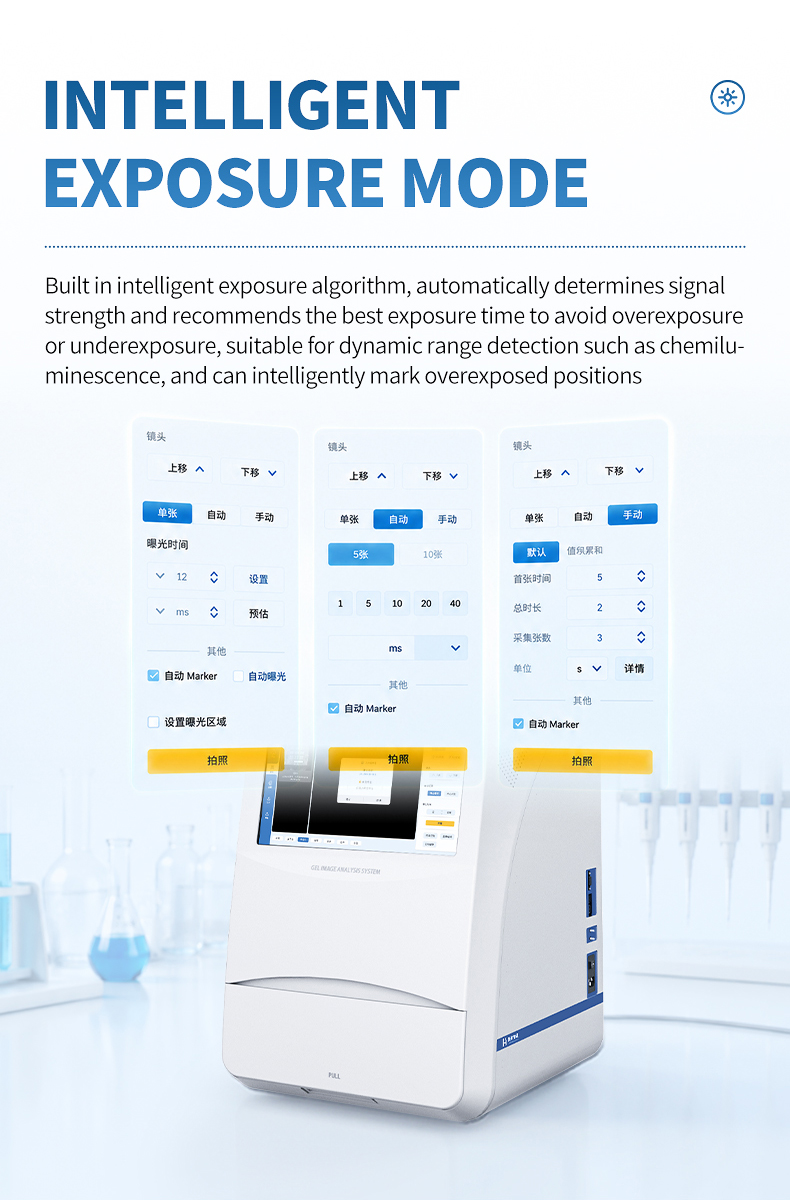
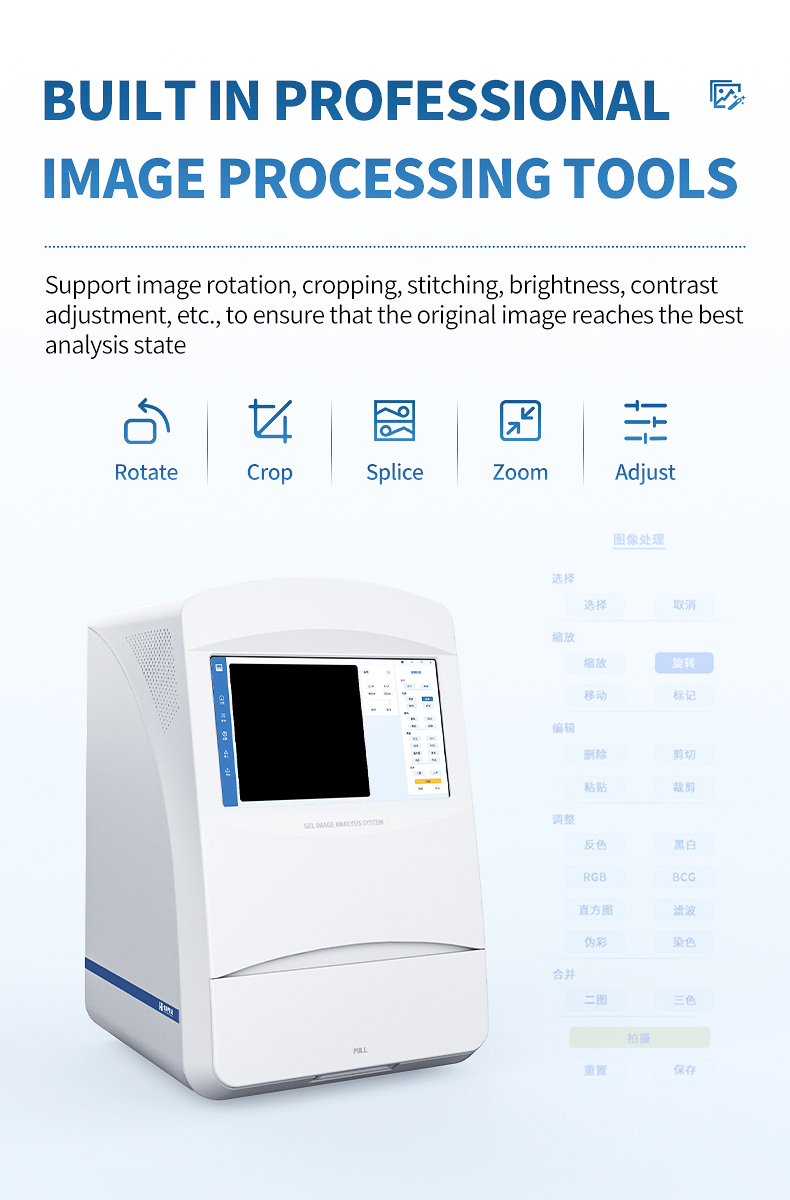
For research groups and biopharma labs that need to document protein expression, validate antibodies, or compare treatment effects, the HM-CL-2 provides a streamlined path from sample to data. Its smart exposure algorithm removes the guesswork from exposure selection, while built-in image processing tools allow quick optimization before export.
Applications
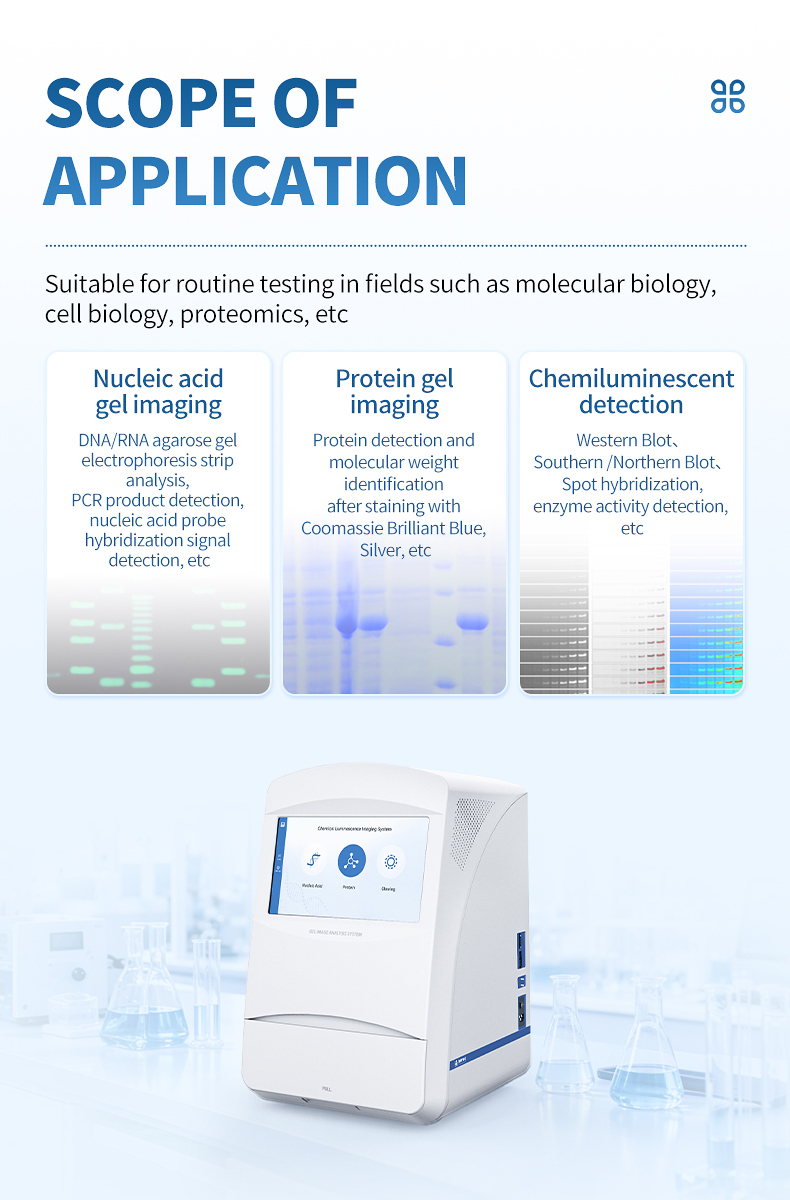
- Quantitative Western Blot: Relative and absolute quantification of protein expression across treatment groups.
- Antibody validation: Confirmation of specificity, cross-reactivity, and titer optimization.
- Post-translational modification studies: Detection of phosphorylation, acetylation, and ubiquitination events.
- Nucleic acid blotting: Southern Blot, Northern Blot, and dot blot detection.
- Enzyme kinetics: Reporter assays and activity measurements based on chemiluminescent substrates.
- Biopharma QC: Batch consistency, clone screening, and stability testing.
Key Features & Advantages
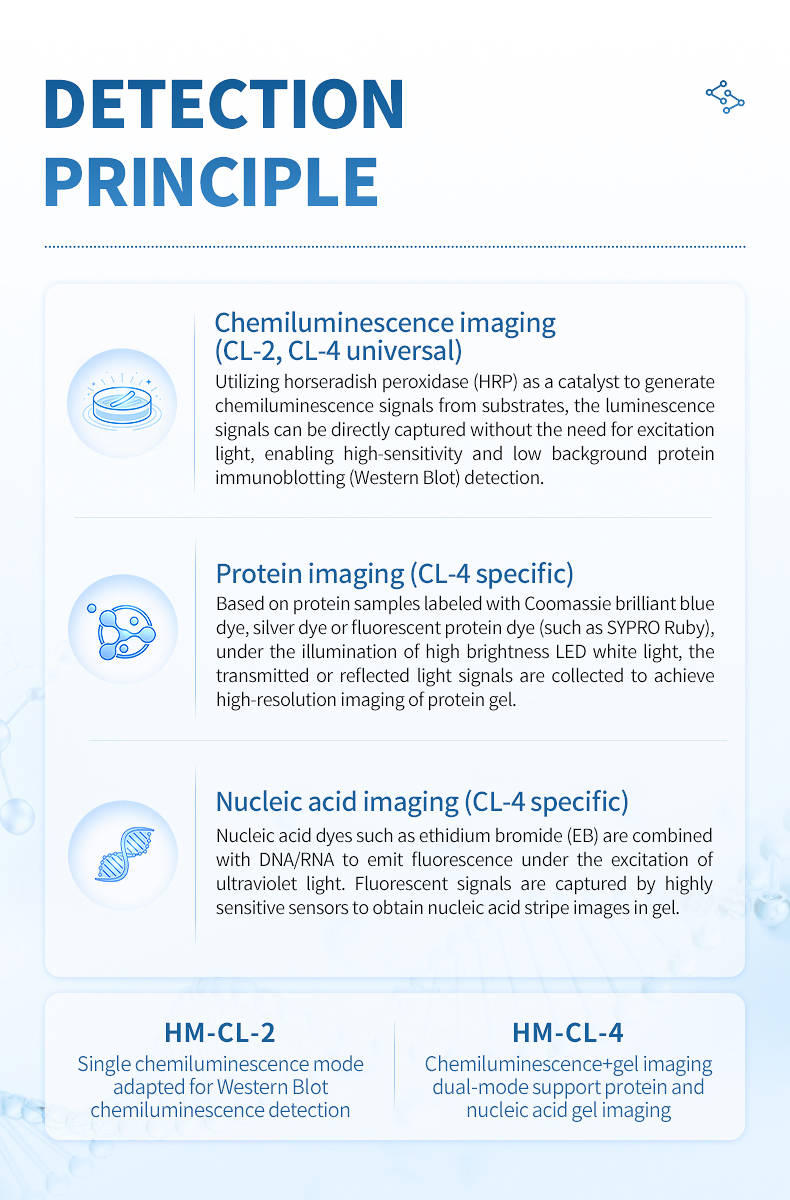
- Integrated touchscreen workflow: The 15.6-inch display eliminates the need for a separate computer and reduces operator error.
- Deep-cooled CMOS sensor: -25 °C cooling minimizes dark current for long-exposure, low-noise imaging.
- 16-bit quantization: 65,536 gray levels provide the linear range needed for accurate densitometry.
- Wide dynamic range: 16,000:1 ratio captures weak and strong bands without multiple exposures.
- Smart exposure control: Algorithm recommends exposure time and flags saturated pixels automatically.
- High-throughput optics: F0.95 lens with ≥ 85% transmittance preserves signal intensity.
- Flexible binning: 1×1 through 8×8 binning adapts resolution and sensitivity to each experiment.
- Generous imaging area: 150 mm × 150 mm field supports standard gels and membranes.
- Built-in image processing: Rotation, cropping, stitching, brightness, and contrast tools.
- Multiple export options: USB 2.0, USB 3.0, and Ethernet interfaces.
- Compact benchtop footprint: 460 × 470 × 715 mm dimensions fit most lab benches.
- Low operating power: ≤ 90 W consumption reduces heat load and running costs.
Technical Specifications
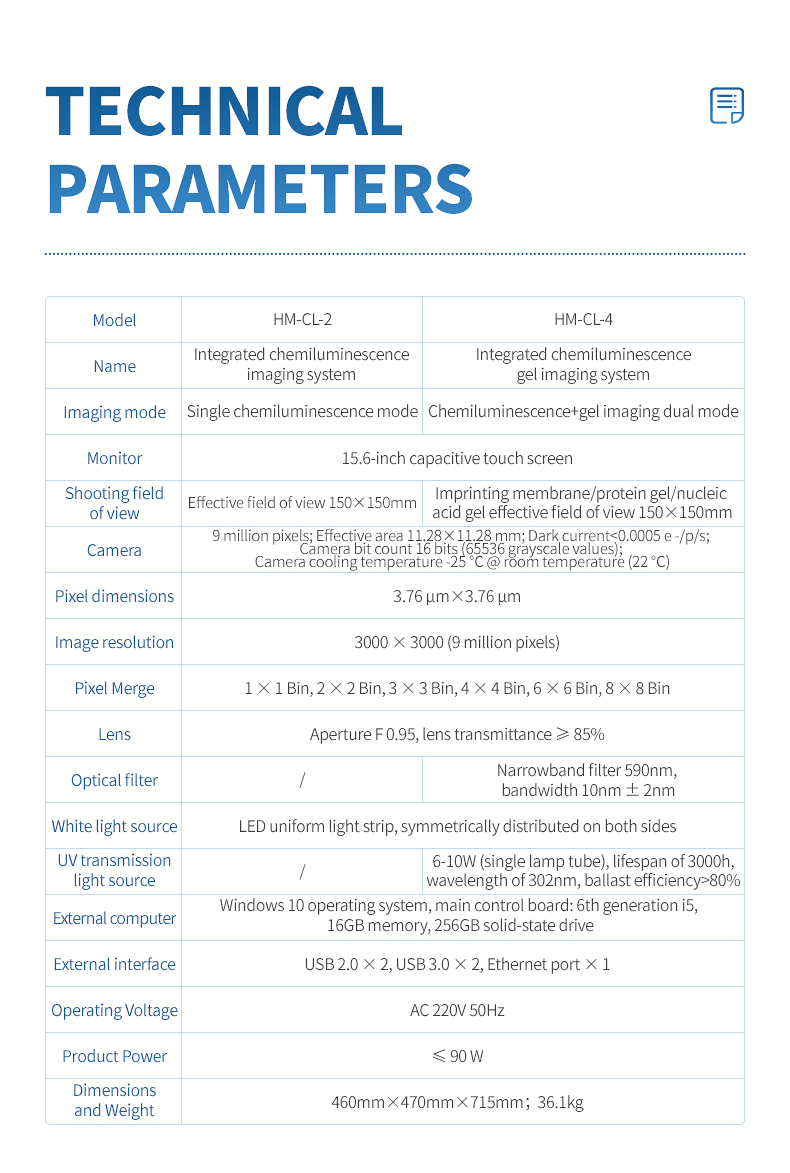
| Item | Specification |
|---|---|
| Display | 15.6-inch capacitive touchscreen |
| Camera | 9 MP cooled CMOS, 16-bit |
| Sensor cooling | -25 °C at 22 °C ambient |
| Dark current | < 0.0005 e-/p/s |
| Pixel size | 3.76 μm × 3.76 μm |
| Image resolution | 3000 × 3000 |
| Dynamic range | 16,000:1 |
| Imaging area | 150 mm × 150 mm effective field of view |
| Lens | F0.95, ≥ 85% transmittance at 400–900 nm |
| Binning | 1×1, 2×2, 3×3, 4×4, 6×6, 8×8 |
| White light source | LED uniform light strip |
| Interfaces | USB 2.0 × 2, USB 3.0 × 2, Ethernet × 1 |
| Operating voltage | AC 220V 50Hz |
| Power | ≤ 90 W |
| Dimensions | 460 × 470 × 715 mm |
| Weight | 36.1 kg |
FAQ
Q1: Can the HM-CL-2 replace a traditional film-based Western Blot workflow?
Yes. The 16-bit cooled CMOS sensor provides digital dynamic range exceeding that of X-ray film, with the added benefits of instant preview, adjustable exposure, and direct quantification.
Q2: Is the system suitable for low-abundance phosphoprotein detection?
Yes. The combination of -25 °C cooling, F0.95 optics, and ≥ 85% lens transmittance supports detection of low-abundance targets when paired with high-quality antibodies and optimized substrates.
Q3: How does smart exposure improve reproducibility?
Smart exposure analyzes signal intensity before capture and recommends an exposure that keeps pixel values within the linear range. This reduces variability caused by manual exposure selection.
Q4: Can images be exported for third-party analysis software?
Yes. The system exports standard image formats through USB and Ethernet, allowing analysis in ImageJ, Quantity One, or other densitometry tools.
Q5: What maintenance is required for long-term reliability?
Regular cleaning of the imaging chamber, verification of cooling performance, and periodic uniformity checks are recommended. HM Instruments provides 280 service outlets for support.
Q6: Does the HM-CL-2 support GLP or accredited laboratory workflows?
The system supports calibration records, parameter documentation, and data export practices aligned with ISO/IEC 17025 and GLP requirements.
Article address:https://www.molecularbio.cn/chemiluminescence-imaging-system/western-blot-chemiluminescence-imager-hm-cl2.html