


 Current
location:
A molecular biology laboratory rarely runs one kind of plate. In a single week it may quantify nucleic acid at 260 nm, run a protein assay at 562 nm, read an ELISA at 450 nm and finish with a luminescence reporter. The reader has to cover that range without turning every new assay into a procurement request — which is why the wavelength system, not the accuracy headline, decides the choice.
This article is written for laboratories assembling or replacing a plate reader, by the engineering team at HENG MEI Intelligent Manufacturing. It focuses on the assays a molecular biology group actually runs and the specifications that change results in those assays.
Start with the wavelength map
Four wavelengths cover a large share of molecular biology work: 260 nm for nucleic acid, 280 nm for protein, 450 nm for TMB-based ELISA, and 562 nm for BCA protein assays. A filter reader fitted with 405, 450, 492 and 620 nm covers ELISA well and the protein assays only partly; 260 and 280 nm require either additional filters within the 340–750 nm range or a full-spectrum instrument.
That single fact usually decides the category. A laboratory whose work is dominated by ELISA can specify a filter reader and add filters as assays change. A laboratory that quantifies nucleic acid regularly, or develops methods where the optimum wavelength is not yet fixed, is better served by a full-spectrum reader covering 190–1100 nm with a bandwidth below 2.5 nm.
Where microplate readers are weak — and what to do about it
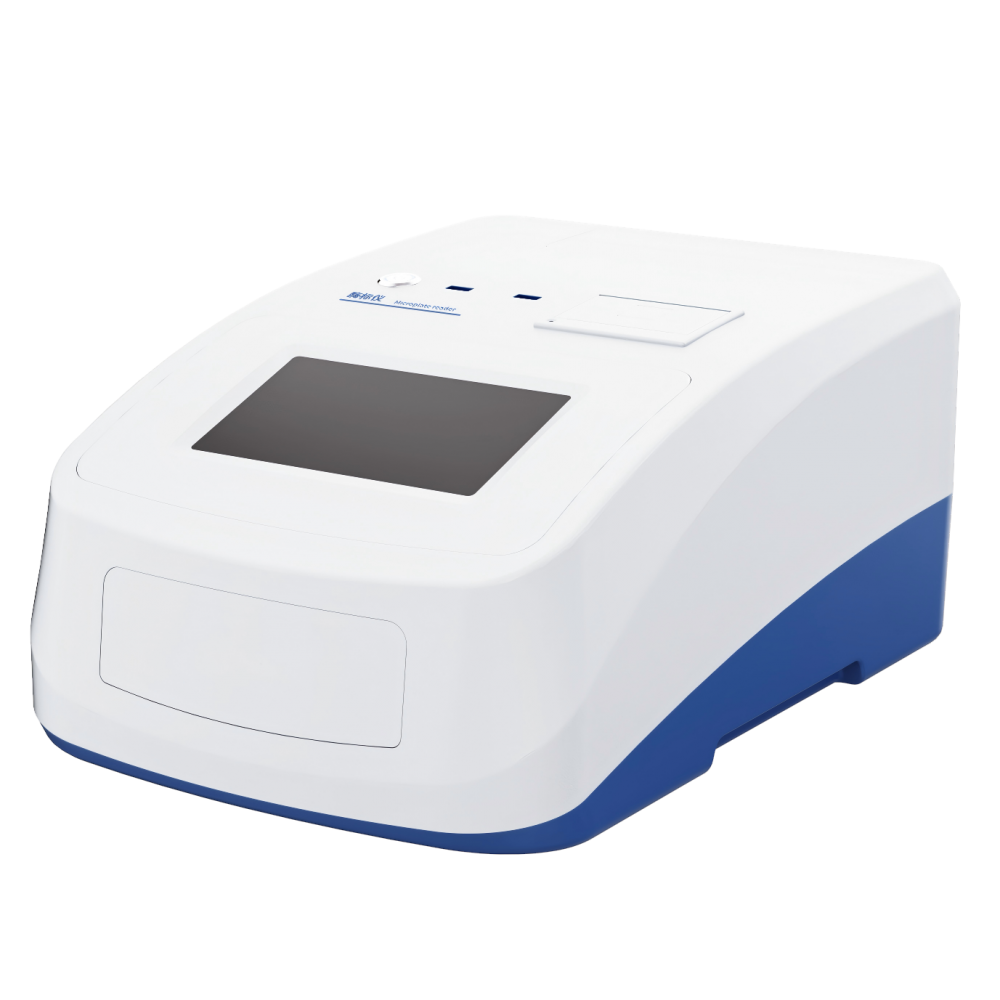
For nucleic acid quantification, a microplate reader reads many samples at once but consumes far more material than a dedicated micro-volume spectrophotometer, and it cannot measure below the plate's minimum volume. Laboratories that routinely work with 1–2 µL of eluted DNA should not expect a plate reader to replace a micro-volume instrument; the plate reader serves the batch QC role, measuring 96 samples after dilution, while the micro-volume instrument handles single precious samples.
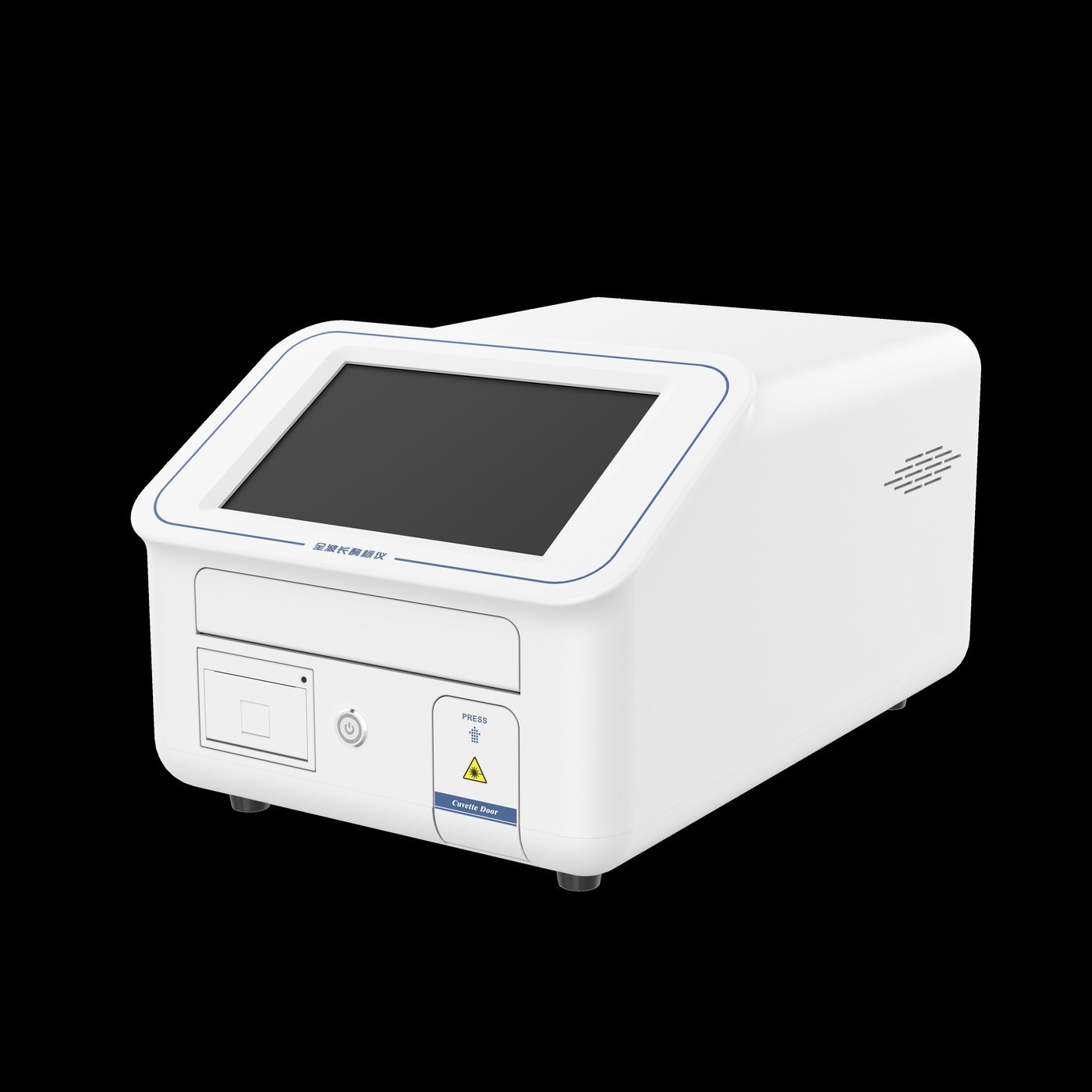
That division of labour is worth stating because buyers sometimes expect one instrument to do both. A plate reader with a cuvette port, such as the full-spectrum models in the HENG MEI range, covers single measurements in a standard cuvette but still requires far more than a microlitre.
Assay-specific specifications
| Assay type | Wavelength need | Specification that matters | Typical pitfall |
|---|---|---|---|
| ELISA (TMB) | 450 nm, reference 620–630 nm | Absorbance accuracy at 1–2 Abs; repeatability ≤0.2% | Reading without reference; plate batch variation |
| Nucleic acid A260 | 260 nm | Wavelength accuracy ±2 nm; linearity to 3 Abs | Reading above the linear range without dilution |
| Protein A280 / BCA | 280 nm or 562 nm | Spectral bandwidth; stray light | Using a filter not matched to the kit |
| Kinetic enzyme assays | Any fixed wavelength | Read speed and temperature control | Plate not at temperature when the first read starts |
| Luminescence reporter | Emission 470/560 nm | Cross-talk ≤0.01%; PMT sensitivity | Assuming an absorbance reader can measure luminescence |
| 384-well screening | Assay dependent | 384-well capability and read time | Buying a 96-well instrument and planning to "upgrade later" |
Absorbance, fluorescence and luminescence are different instruments
It is worth separating three measurement modes that are often discussed as one purchase. Absorbance readers measure light transmitted through the sample and are the workhorse for ELISA and colorimetric assays. Luminescence readers measure light emitted by the reaction with no lamp at all, using a photomultiplier tube; their sensitivity — around 50 pg/ml with seven orders of dynamic range in the HM-96C — is why reporter-gene and ATP assays use them. Fluorescence readers excite with one wavelength and detect another, and are a third optical system again.
A laboratory planning a luminescence programme should budget for a luminescence-capable instrument rather than assume an absorbance reader will manage with a different filter. The physics does not allow it.
Quality management features that matter under GLP/GMP
In a regulated laboratory, the reader's optics are only half the requirement. The other half is the record: who ran the plate, when, with which settings, and whether the run was in control.
- Three-level user permissions with audit trail. Required to demonstrate that results were not altered after acquisition.
- Stored project templates. Assay settings recalled rather than re-entered, which removes a common source of inconsistency between operators.
- Data export in both spreadsheet and document formats. Raw absorbance values must be exportable, not only the final classification.
- Verification support. A maintenance menu that reports instrument status and prints it supports both internal checks and external verification visits.
Metrological verification in China follows JJG 861-2007 for microplate analysers, with YY/T 1529-2017 describing enzyme-linked immunoassay analysers for clinical use. Confirm at purchase who performs verification, at what interval, and whether the certificate is provided.
Practical selection sequence
- List the assays for the next two years and mark the wavelength of each.
- Count how many fall outside 405/450/492/620 nm. One or two justify added filters; four or more justify a full-spectrum reader.
- Decide whether 384-well plates are coming. If yes, specify a 384-capable instrument now.
- Decide whether luminescence is on the roadmap. If yes, it is a separate optical system.
- Confirm the regulated-work requirements: users, audit trail, export formats, verification support.
- Demonstrate with your own kit and plate, and compare optical densities with your current instrument.
How HENG MEI covers the range
HENG MEI Intelligent Manufacturing supplies filter-based readers (HM-96A with a 7-inch screen, HM-96B with a 10-inch screen), full-spectrum readers (HM-96Q for 96-well and cuvette work, HM-384Q adding 384-well capability) and the chemiluminescence HM-96C. All share a consistent user interface and export format, which keeps training and records uniform when a laboratory expands from ELISA into quantification or luminescence.
The selection logic across the whole range, including price bands and the specifications most often misread, is set out in our microplate reader selection guide. To match a model to a laboratory's workload, tell our sales contact the assays, the wavelengths, whether 384-well plates are used and whether the laboratory works under GLP or GMP.
Contact: Arthur, Sales Contact, Arthur@hmdzkj.cn, +86 18353666151 (Tel / WhatsApp / WeChat).
Article address:https://www.molecularbio.cn/news/microplate-reader-molecular-biology-laboratory-choice.html