


 Current
location:
A genotype result is only useful if it changes a decision. In most pigeon lofts, the result arrives as a page of locus values and is filed without affecting the pairing plan — because nobody defined in advance what the values would be compared against. This article describes how to build that comparison, and where to stop.
It is written for loft managers and small genotyping services, by the engineering team at HENG MEI Intelligent Manufacturing.
Build the record before the first sample
The record decides whether genotype data accumulates into knowledge or into a drawer. A workable structure has one row per bird and columns for identity, pedigree, performance and genotype.
| Field group | Content | Why |
|---|---|---|
| Identity | Ring number, hatch year, sex | Links to federation records |
| Pedigree | Sire, dam, and their genotypes where known | Without parents, a variant's origin is unknown |
| Performance | Races entered, distance, position, weather | The only external validation of a genotype |
| Genotype | Per-locus result, assay version, test date | Assay versions change; results are not comparable across them indefinitely |
| Health | Vaccination, treatments, screening results | A genotype does not predict a bird that cannot race |
The pedigree column is the one most often left empty, and it is the one that makes the rest useful. A variant that appears in a consistently performing family means something different from the same variant in an unproven bird.
Pairing logic that uses the data without over-reading it
Three rules keep genotype data in its proper place.
- Use genotype to avoid, not to promise. The strongest legitimate use is avoiding a pairing that would concentrate an unfavourable variant, or retaining one that a successful family carries.
- Never pair on a single locus. One marker explains a small part of a trait that is itself polygenic and heavily environmental.
- Keep an unselected control. Retain a few pairings made on pedigree and performance alone. If the genotype-selected pairings are not measurably better after two or three seasons, the selection is not working and you need to know that.
The control group is uncomfortable because it feels like wasting a season. It is also the only way to learn whether the panel predicts anything in your own line, as opposed to in the population where the association was originally described.
What two or three seasons of data can show
Marker-performance associations are population statistics. In a single loft, with perhaps 40 birds and 60 race results a year, the sample is small and the confounders are large: training method, feeding, weather, and the fact that good birds tend to be paired with good birds.
A realistic expectation after three seasons is a directional signal — for example, that offspring carrying a particular combination place more often at long distance in your loft — not a predictive equation. Breeders who expect more either abandon a useful tool or over-select on it, and over-selection is the worse outcome.
The diversity cost of selection
Selecting hard on a small panel narrows genetic variation. In a closed loft this shows up after several generations as reduced vigour, increased inbreeding depression and greater susceptibility to disease. Practical mitigations are simple but require discipline: introduce an unrelated bird every few generations, avoid pairing birds that share both parents, and treat a genotype panel as one filter among several rather than as the primary criterion.
Genotyping cannot manage a gene pool. It can only tell you what is present at seven loci. The rest is breeding judgement, and pretending otherwise is how a tool that should help a loft ends up damaging it.
Practical sample handling
- Collect feather pulp or blood, label by ring number at the moment of collection.
- Batch samples to fill runs: on a 32-well instrument, four birds plus controls per run.
- Store results with the assay version. A panel updated with new primers produces results that should not be mixed with older ones without a note.
- Re-test only when the assay changes, not seasonally; the genotype does not change.
Instrument and service considerations
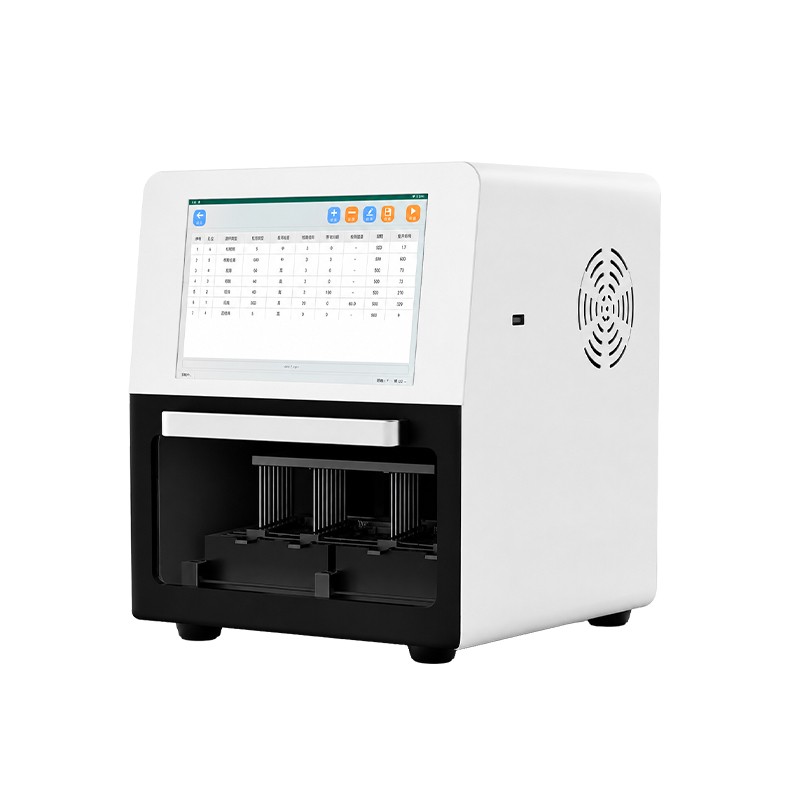
The instrument side of this workflow — 32 wells, four channels, 5.8 kg, same-day results — is described in our pigeon genotyping guide. Lofts that outsource testing should ask the service which loci it reports, which assay version it uses, and whether it reports per-locus genotypes rather than a single score. A service that reports a score is hiding the data that makes the result useful.
HENG MEI Intelligent Manufacturing supplies the real-time PCR platform in 8, 16 and 32-well formats for lofts and service providers, with assay reagents selected to the customer's panel. To plan a loft programme, tell our sales contact the birds per season, the loci you want, and whether parentage or sex determination is included.
Contact: Kyra, Sales Contact, Kyra@hmdzkj.cn, +86 13792642016 (Tel / WhatsApp / WeChat).
Article address:https://www.molecularbio.cn/news/using-genotype-data-pigeon-breeding-plan.html