


 Current
location:
Biosecurity decisions on a poultry farm are time-critical. A house with sudden mortality, a drop in water intake or respiratory signs presents a choice: wait for a laboratory result, or act now and accept the cost of a false alarm. An on-site PCR instrument compresses that wait from days to hours, which changes the decision rather than the diagnosis.
This article describes where on-farm molecular testing earns its place in a biosecurity routine, and where it creates risk if used carelessly. It is written by the engineering team at HENG MEI Intelligent Manufacturing.
What changes when the result is same-day
Three decisions are genuinely time-sensitive, and they are the ones that justify the instrument.
| Decision | Laboratory timescale | On-site timescale | Consequence |
|---|---|---|---|
| Isolate a suspect house | 1–3 days | 2–4 hours | Movement stopped before spread to adjacent houses |
| Delay or proceed with vaccination | Days | Same day | Avoids vaccinating an incubating flock |
| Approve bird movement between sites | Days | Same day | Reduces the temptation to move without testing |
Everything else — surveillance serology, routine monitoring, export certification — is better done at a laboratory where volume and accreditation belong. The mistake is buying an instrument for the routine workload and discovering it is idle, or buying it for the emergency and never training anyone to run it under pressure.
A sampling plan that supports a fast decision
The value of a same-day result depends on the sample being representative. For a suspect house, a practical plan samples across the house rather than the sickest birds alone: cloacal and tracheal swabs from several positions, pooled sensibly, with the pooling recorded so a positive can be localised.
- Sample across the house, not only at the door or the dead-bird bin.
- Include recently dead birds where the target is a systemic pathogen; tissue from carcasses often carries a higher load than a live swab.
- Record the pool structure so a positive result maps back to a location.
- Keep a duplicate set for submission to the reference laboratory; an on-site result is a decision aid, not a substitute for official confirmation of a notifiable disease.

Decision rules, written in advance
Under pressure, people invent rules. A farm that has not decided in advance what a positive result triggers will improvise something expensive or something unsafe. The rule should be short and posted where the instrument sits.
| Result | Action | Who is notified |
|---|---|---|
| Positive for a notifiable target | Stop movement, isolate the house, submit duplicate samples to the authority | Farm manager, veterinarian, veterinary authority |
| Positive for an endemic target | Treat according to the veterinary plan; review ventilation and stocking | Farm manager, veterinarian |
| Negative, clinical signs continue | Re-sample a wider set; consider a different target | Veterinarian |
| Invalid run (control fails) | No decision; re-extract and re-run | Operator, and the record |
The last row is the one that gets skipped. An invalid run reported as negative is worse than no result, because it closes a question that should still be open.
Contamination control on a farm
PCR is powerful enough to detect a molecule. That same sensitivity makes a farm-based laboratory vulnerable to amplicon contamination, and the consequences are expensive: weeks of false positives, lost confidence in the instrument, and movement decisions made on artefacts.
- Two areas minimum: extraction and amplification in separate rooms, with a one-way workflow from clean to dirty.
- Dedicated clothing and gloves for the PCR area, never worn into the houses.
- Filter tips, changed between every sample.
- No-template control every run, and a stop-and-investigate rule if it amplifies.
- Never open amplified tubes near the extraction bench.
Capacity, realistically
An eight-well instrument supports four to five samples per run with controls, which fits a single farm's suspect case. A site with several houses and frequent suspects should plan for 16 wells; an integrator running its own laboratory for multiple farms needs 32 or more. The arithmetic is covered in our 8-well capacity guide.
How HENG MEI supports farm-based testing
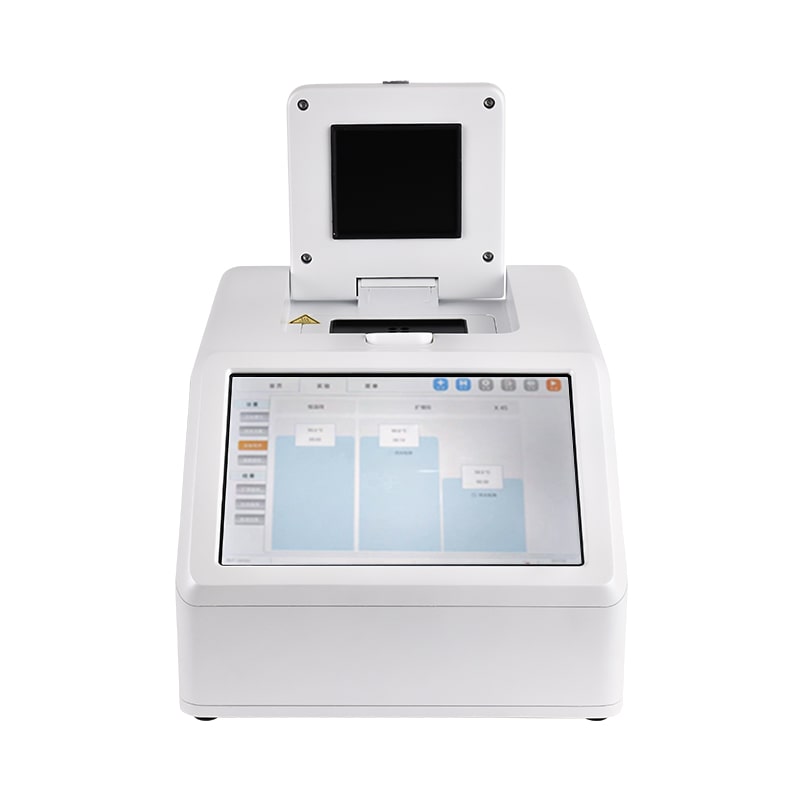
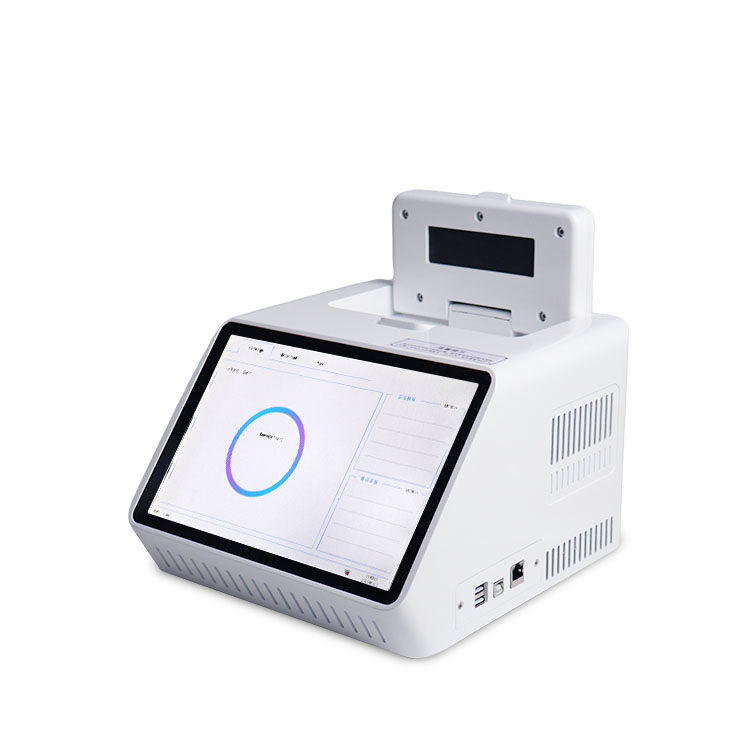
HENG MEI Intelligent Manufacturing supplies the HM-P08 eight-well instrument with a 7-inch touchscreen, and the same platform in 16 and 32-well formats, so a site can scale without retraining. Assay kits are selected to the targets relevant in the region, and the extraction workflow is specified with the instrument rather than left to improvisation.
To design a farm testing routine, tell our sales contact the houses on site, the suspect cases per month, the targets you must rule out and who provides official confirmation. Those four facts determine the well count and the decision rules that go on the wall.
Contact: Grace, Sales Contact, graceliu@hmdzkj.cn, +86 17853698681 (Tel / WhatsApp / WeChat).
Article address:https://www.molecularbio.cn/news/poultry-biosecurity-monitoring-on-site-pcr.html